



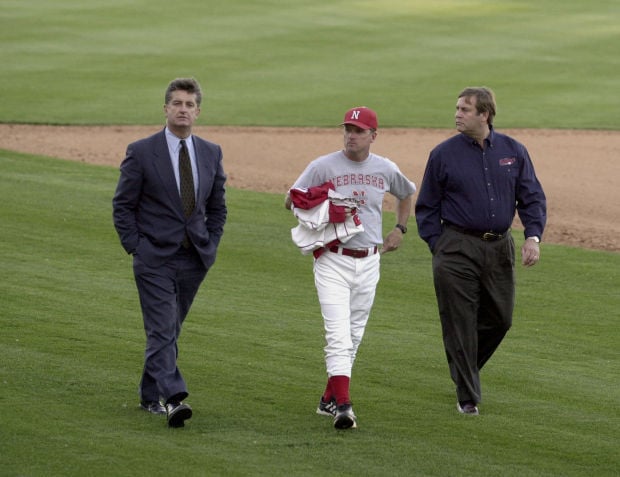
Jim Abel, is CEO and chairman of NEBCO, one of Nebraska’s largest employers -- a fourth-generation family business headquartered in Lincoln with subsidiaries across the state.
He grew up in Lincoln and attended the University of Nebraska for a year before transferring to Arizona State, where he graduated in 1973 with a degree in business.
Abel and his wife, Mary, have one son, Jack, 26, and a beagle named Millie. (Millie’s likeness is often featured in Saltdogs promotions at Haymarket Park and she is a past winner of the Journal Star Pet of Year contest.)
Recently, Abel agreed to share a bit of his philosophy of business and life in a Q & A.
In chemistry circles, NEBCO is an acronym for neodymium erbium barium copper oxide. What about your NEBCO? Does is stand for something?
People are also reading…
JA: It just means Nebraska Company. That was my father’s word, but I think he just wanted something different than the family name and NEBCO came up because we’re very much a Nebraska company.
Your grandfather, George Abel, began Abel Construction in 1908 and it’s now grown into its third generation as NEBCO. What are your favorite memories of your granddad?
JA: My grandfather died in 1937, so you know from a physical sense I never knew the man, but I just have a great sense of who he was and what his expectations were by things I’ve read.
His obituary I keep in my office, it tells me a lot about who he was, and how he went about his business and how he’d want things run. On Jan. 13, 1937, the Lincoln Journal had a very nice opinion (piece) about him. It talked about how he was a hardworking individual who cared for his men, always on the job early, how he cared about his community and, so anyway, I really feel he’s given me a direction even though I never met him.
My grandfather had five children, my dad and four sisters, when his health was failing rather rapidly at the Mayo Clinic in Rochester, he wrote out, “Rules for guidance by Daddy.” The first thing was take an inventory of yourself every day so you can do better than you have done, go to church, do not try to keep up with the Joneses, never be jealous of one another, keep in touch with each other and do some social or charitable work.
I don’t know how many times I’ve read that. In my own work, these things resonate with me and really have given me a direction on how we would treat the people we work with, and how we would treat the community.
That’s very powerful.
JA: It is. Another really powerful moment happened as I was getting ready for our 100-year anniversary (2008) and I came across an article from 1936 or '37, where my grandfather offered $25,000 to any professional baseball team that would locate to Lincoln. I had no idea about this. I guess the old acorn doesn’t fall too far from the tree. (NEBCO owns the Lincoln Saltdogs baseball team.)
What about your dad?
JA: I really got along with my dad. He was exactly what a dad was supposed to be like. He was a great mentor and a great friend and I think about him a lot. (George Jr. died in 1998; his widow, Betty, Jim's mom, is 94.)
You started in the family business after college working on highway paving and asphalt crews. Best job ever?
JA: After my freshman year (at UNL) I worked on our county road gravel crew. After I graduated (from Arizona State) and I came back, my dad offered me an office job or a field job and you know, I really wasn’t ready for an office job, so I chose to go back out in the field and I’m really glad I did. I probably spent another three years out there. There’s a lot of roads I still travel today, Cornhusker Highway, Highway 77, Highway 15, that I was part of the paving gang on, so there’s always kind of a connection.
I loved being outside, I liked being part of seeing something being built and I really liked the people that I worked with. A lot of the people I worked with in the early '70s moved up in the company -- superintendent, plant manager -- and that time together way back when, we forged a great trust between us.
Does it irritate you when people don’t know the difference between cement and concrete?
JA: Ah, no, but I do correct them. I simply say, "You know, cement is to concrete as flour is to bread.”
I don’t know if you remember Erin Brockovich (a 2000 movie based on the whistleblower starred Julia Roberts). She was doing an interview on TV and called concrete cement, and our plant manager wrote her a letter and corrected her and she wrote back and said, “Thank you for correcting me.”
What kind of boss was your father, and what kind of boss are you?
JA: My dad was well-liked. He was tough but, you know, he was a very kind man and a very fair man. Me, not so tough. Probably I would say I’m approachable and determined. Both George and I shared the management style that we put our trust in our people to do their jobs.
NEBCO pours a lot of concrete; can you give us an estimate of the number of pounds (tons) annually?
JA: That’s a big number, but it probably wouldn’t mean anything to anybody.
Is it a gazillion?
JA: No.
You were honored by the Architectural Foundation of Nebraska in 2012. They said, in part, “Jim Abel has used his imagination to recognize the potential of certain innovative development projects in key locations in and around Lincoln …” Do you have a favorite?
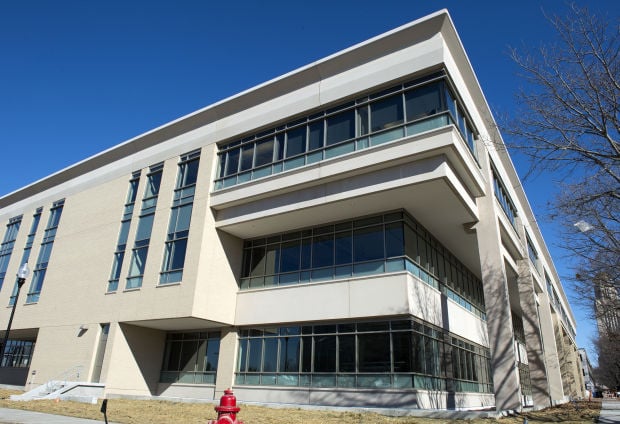
JA: They’re all my favorites. But Quarry Oaks was fun. Fallbrook’s been challenging, but I love all the architecture that gets to go with it. (Abel took architecture courses at ASU.) The buildings on Lincoln Mall -- that was a project my dad started way back in the '60s -- so I was determined to get his vision finished down there.
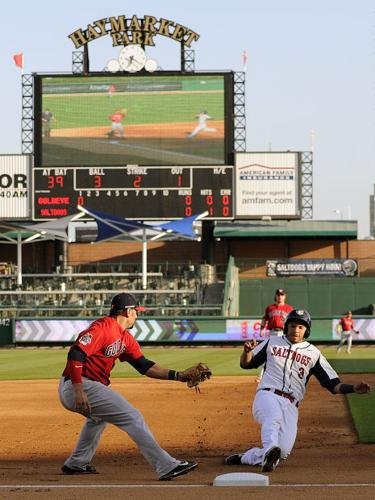
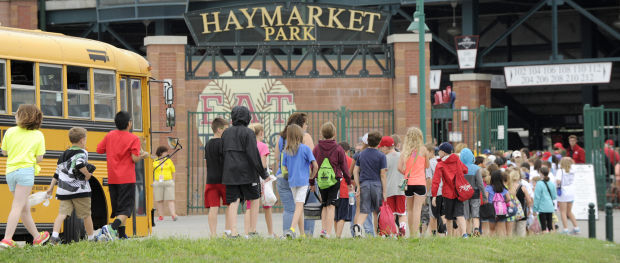
The one that stands out is Haymarket Park, and there are two reasons for that. One, it was kind of a unique situation at the time, the city’s first public-private partnership, people working together for a common goal. (Haymarket Park was a joint effort between Abel, the city and UNL.) The city was a big part of that. I didn’t know (then mayor) Don Wesely at all, we came from two completely different backgrounds, and to this day we are good friends. The message that I think comes out of that is people can get along -- different political backgrounds or public sector, private sector -- and the results can be terrific.
I think it (Haymarket Park) kind of paved the way for people doing things together. At Fallbrook, we have a combination YMCA and middle school, which was two different groups coming together. I think Pinnacle Bank Arena is another extension of it.
How do you define success in the business world? In your personal life?
JA: I guess I’d change that question around: "What makes a business successful?" I think the first thing you have to have is extremely ethical behavior throughout. That’s your brand. I think to be successful, you have to obviously value your employees, your customers. I think the people in the business have to be hardworking and have a clear understanding of the business they’re in. I think it’s important for businesses to be philanthropic because I think that tells you a lot about the leadership of a company. I’ve always said I would never sit on a board of a company that didn’t have a foundation.
As far as me personally, I guess it goes back to where we started, it’s a family business. How I will treat my success is my ability to pass the business onto the fourth generation and keep it going. That’s how I’m going to define it. I’m fortunate there, I have a son and a nephew. Jack Abel is my son and Phil Abel is my nephew, and I have tremendous confidence in both of them.
Abel Hall is named after your grandfather. Hazel Abel Park is named for your grandmother. Is anything named after you?
JA: (Laughs) Don’t you have to be deceased? The answer is no, and that’s not important to me.
Husker football, basketball or baseball?
JA: Enjoy them all. You put me on the hot seat here. My father and brother both played football at Nebraska. I go to an awful lot of basketball games, so I would not pick a winner there.
NEBCO has acquired (and founded) a number of businesses -- Apollo Steel, Christensen Concrete Products, Concrete Industries Inc., Constructors Inc., Ready Mix Concrete Co., Kerford Limestone Co., NEBCO Farms, NEBCO Intermodal, Nebraska Ash, OL&B Railway Co., Overland Sand & Gravel, Reimers-Kaufman Concrete Products Co., Trafcon, U-Mix Products Co., NEBCO Realty Group, Western Sand & Gravel Co., Lincoln Saltdogs & Haymarket Park, Quarry Oaks. Did I leave anything out?
JA: You’re pretty accurate there.
In the past 70 years, the Abel Foundation has donated millions to benefit a variety of causes. When you received the Distinguished Service Award from Lincoln Center Kiwanis in 2012, Kiwanis member John Chapo said: “When someone mentions community leadership and volunteerism, Jim Abel’s name immediately skyrockets to the top of the list.” Is there a cause that is dear to your heart?
JA: There’s a whole bunch of projects. United Way is one I’ve gotten involved in. It’s kind of where the community comes together. Others that come to mind are the Children’s Museum and the Children’s Zoo. We like the Game and Parks Foundation, the Humane Society, obviously the University of Nebraska, the YMCA, Nebraska Wesleyan, there’s a lot of good ones. We’re happy to support them.
Can you put a dollar amount to the foundation’s work?
JA: What we try to accomplish in our foundation is how to make things happen, I’m not sure we are keeping score. What’s important to us is making a difference in our community, helping good projects get off the ground.
Introvert or extrovert?
JA: I never thought about that. I’m really an extrovert, but when it comes to the public realm, doing interviews, I’m probably an introvert.
Favorite Lincoln restaurant -- past or present?
JA: If I’m close to my house, we like Venue and the Garage. The other one that’s kind of been in our world for a lot of years is the Tam O’Shanter. If I’m in north Lincoln, I like Schilling Bridge or Toast.
You are a founding member of Vision 2015. What’s left to be accomplished in Lincoln? (How do you respond to letter-to-the-editor writers who criticize you for benefiting from the building of the vision, i.e., Pinnacle Bank Arena?)
JA: The one thing we’re still trying to analyze is the need for more Legion-type (baseball fields) in Lincoln. That’s probably the last one. We’re still trying to get our hands around that.
What would be good for Lincoln? The one thing that’s come up is, “Could there be a catalyst project that would build a south downtown?” We saw what the arena did to add a lot of life and energy and growth. I know there’s some talk of the downtown Y needing a new location, or a discussion of a new version of a downtown library. So I think there should be some thought of what could go in south downtown to create some activity.
What about your critics?
JA: I say this very politely: 14 years ago you wrote a little article and blamed me for swimming pools not being open -- and you said, “Jim Abel gets his ballpark and we don’t get our pool.” (City budget cuts included closing Kuklin Pool -- formerly Muni Pool -- at 23rd and O streets.)
So have you been mad at me for 14 years?
JA: No. I liked Muni. I used to go there all the time.
I’m trying to do what I think are good projects for our city. Going back, when I think of Don Wesely, we talked about the berms (at Haymarket Park), and we put these berms in because it made the game affordable to everybody in this town.
You never responded to my column, is that the norm if you read something that bothers you?
JA: I guess I did, 14 years later. I do read the paper, so I know what’s being said. But responding to critics, you don’t. You just don’t.
Bowling, golf or horse racing? And why?
JA: You know, I love golf, although I don’t play very much. I used to caddy for my mother, caddy for my dad. I really enjoyed caddying for my mother because she was really, really good. I love the game of golf.
Horse racing kind of comes from my mother’s mother. She started going to the horse races as a young girl because she had health issues and I’m grateful that she started that love of racing in me. For me to see my grandmother usually involved going to (races) at Ak-Sar-Ben, or, when she’d come visit me at Arizona State, I’d meet her out at Turf Paradise. I enjoy the animals and I enjoy the sport. I have for a long, long time.
Do you own race horses?
JA: I have a stable of one. (Laughs) Actually, I have a stable of two, and that’s about the extent of it.
Thank you so much for your time.
Reach the writer at 402-473-7218 or clangekubick@journalstar.com. On Twitter @TheRealCLK.

Cindy Lange-Kubick
Columnist


