


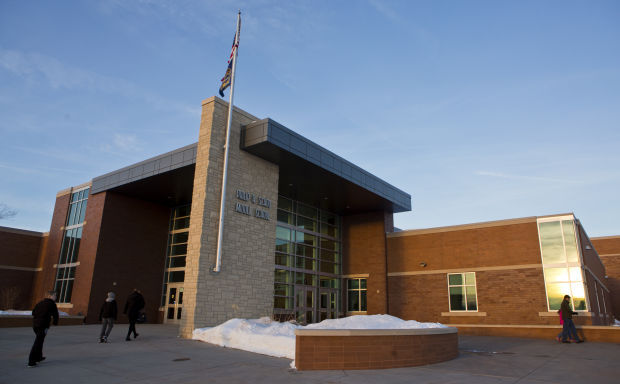
Cavett Elementary overlooked a cornfield when its doors opened on 36th Street south of Pine Lake Road 20 years ago.
Like the other grade schools that opened in the mid-1990s -- Campbell, Maxey and Roper -- Cavett hugged the edge of city and school district boundaries at that time, a brick-and-mortar testament of things to come.
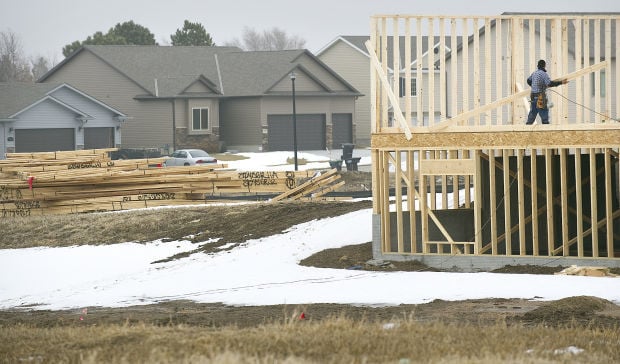
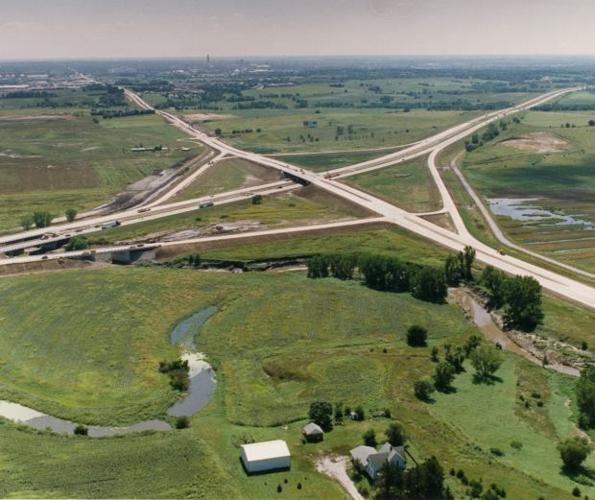
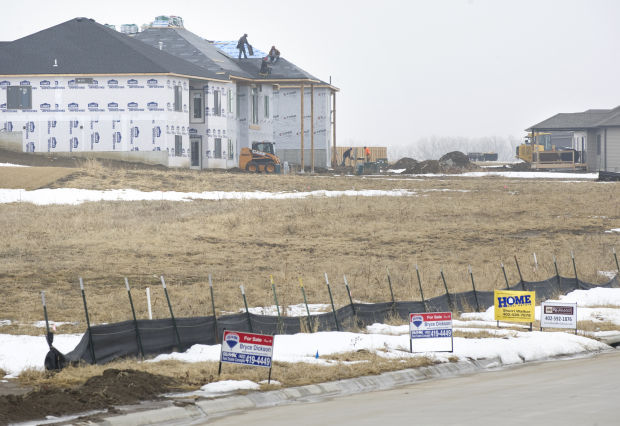
And they did come -- houses, stores and restaurants springing up as fast as developers could build them -- pushing Lincoln’s borders farther and farther.
The steady creep of Lincoln’s southward growth wasn’t just residential: In 1998 SouthPointe Pavilions, Lincoln’s first new shopping mall in decades, opened near 27th and Pine Lake Road. Other commercial development followed.
The city was pushing north, too. Big box stores like Wal-Mart, Sam’s Club and Toys "R" Us swallowed land along 27th and Superior streets. Rooftops sprouting in surrounding neighborhoods filled a new high school in north Lincoln, as they did in the city's southwest quadrant.
People are also reading…
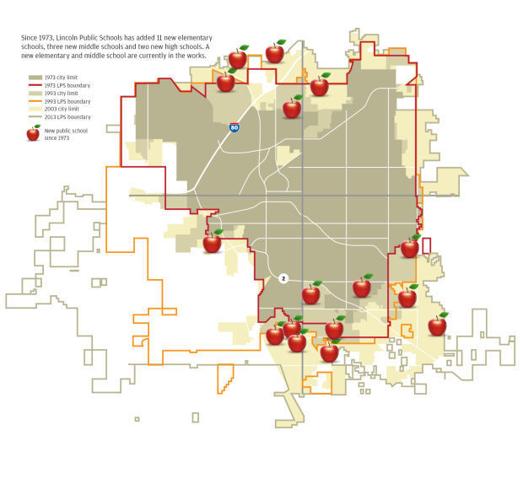
During that time Lincoln’s footprint had increased more than 40 percent. From 1993 to 2013 Lincoln grew from 65.2 square miles to 91.9 -- nearly twice the level of growth seen in the 20 years previous.
From 1993 to 2013, the city’s population grew by more than 30 percent, moving beyond a quarter of a million people. Lincoln Public Schools enrollment jumped more than 23 percent during that time, and in the just the past two years it has grown by more than 2,000 students.
To keep pace, voters have passed four LPS bond issues since 1993, which together authorized two new high schools, four new middle schools and eight new elementary schools.
Acting City Planner David Cary said the boom followed the city's policy of measured growth laid out in the comprehensive plan's long-range vision.
“We try to grow in a multi-dimensional manner,” he said. “Some directions grow faster, especially in the last 20 years to the south and southeast.”
Today, residents living in the Southern Hills neighborhood in southwest Lincoln can send their kids to Scott Middle School, buy their food at Super Saver and work out at the YMCA without leaving the area.
Ten miles away, residents of Fallbrook in the far northwest corner of the city can buy their food at Super Saver, send their kids to Schoo Middle School and work out at the YMCA without ever leaving the area.
While Lincoln has grown enough that residents can -- and do -- spend most of their time in and around the area where they live, the West Haymarket development and other downtown projects draw people there, Cary said.
“When cities get to a certain size you do have the ability to live, work and play in one area, and lots of people do that in Lincoln,” he said. “But I do think Lincoln’s small enough, people still do and can have a relationship with downtown. It’s one of the best things about Lincoln.”
Downtown housing takes pressure off growth at the edges of town, but doesn’t eliminate it.
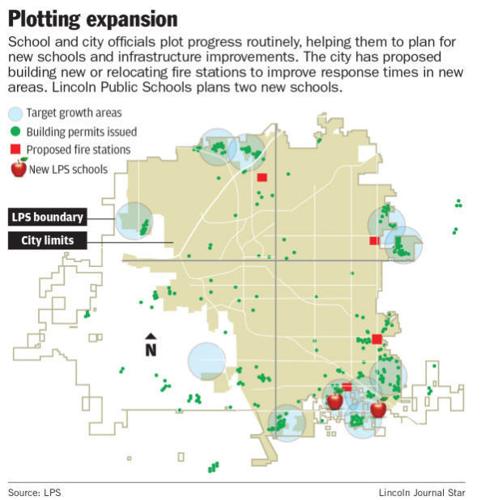
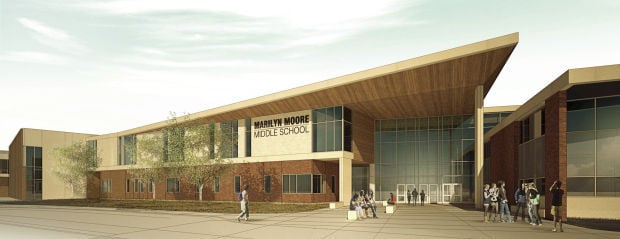
The latest LPS bond issue will build a new elementary and middle school that will draw from Lincoln's fastest growing area, southeast Lincoln. At the same time, the city wants to increase its share of the sales tax to pay for new fire stations to cover growing areas.
The city’s growth -- and trying to predict it -- consumes much of LPS Operations Manager Scott Wieskamp’s time.
He studies the city’s comprehensive plan, tracks building permits, watches the planning commission and follows enrollment trends at the district’s 55 schools, seeking an answer to the elusive question:
Where are Lincoln’s children going to live and how does the district create enough classroom space for them by the time they get there?
“I drive around monthly and I see houses under construction,” he said. “All that growth information keeps us busy. You just keep planning. Plan, plan, plan.”
Several years ago, LPS built Kooser Elementary at 7301 N. 13th St., its driveway touching north Lincoln's Alvo Road. Fewer than 300 students enrolled the first year. Five years later, enrollment is over 700 and school officials worry about overcrowding.
And little more than a decade after district officials opened two new middle schools -- Scott and Lux in southwest and east Lincoln, respectively -- they added on.
Before floating the last $153 million bond issue, LPS officials watched developments springing up across the southern, eastern and northern edges of the city: Wilderness Hills, The Woodlands at Yankee Hill and Village Gardens to the south; Waterford Estates and Prairie Village North to the northeast and the continued growth of Fallbrook, Stonebridge Creek and Charleston Heights in the northwest.
They banked on the most concentrated growth being to the south and planned new schools there, hoping additions to existing grade schools in the northeast would be sufficient.
While anticipating growth is the biggest challenge for school officials, keeping on top of street improvements is probably the city’s, Cary said.
A planned expansion to Pine Lake Road from Nebraska 2 to 59th Street is overdue, he said. Portions of Yankee Hill Road will be improved in conjunction with construction of the new middle school.
Longer term, the city will continue to grow to the south, between 14th and 84th streets, the northwest and inevitably the east.
For many years, the city’s growth stopped at 84th Street.
“(It) was the ends of the earth,” Cary said. But the sewer trunk line has opened up areas east of 84th Street from A to Adams streets for development.
Wieskamp is watching, anticipating, expecting the next bond issue to include a new elementary in the northeast part of town. He knows the northwest will continue to grow, that more new schools are inevitable in the southern quadrant.
“I stress about all three of these areas,” he said. “I worry about keeping up, especially when you have 1,000 (new) kids a year.”
Reach the writer at 402-473-7226 or mreist@journalstar.com.

Margaret Reist
Local government reporter


