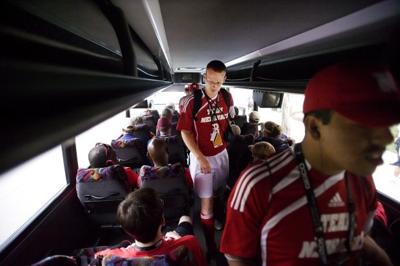

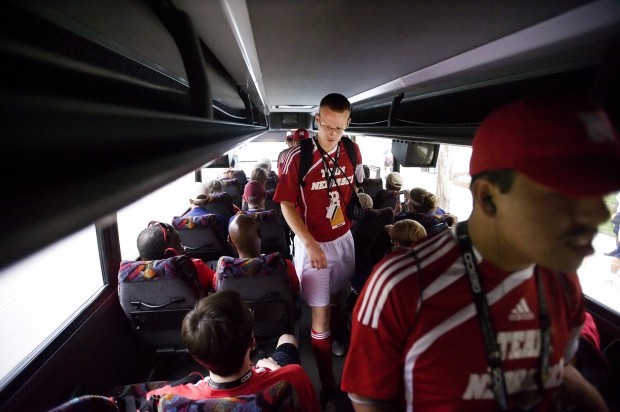
How do you move 4,000 people from here to there and back?
Jerry Thraen does it with 27 buses (from four different lines), a handivan, seven cars and vans, 50 volunteers and 10 phones to keep track of everyone.
Every day this week, he's moving Special Olympics athletes, coaches, volunteers and VIPs to 13 sport sites around campus and off.
There are four basic shuttle services -- around the campus, to specific sport sites, from two parking lots to campus and downtown to campus.
Plus, Thraen offers special door-to-door service for the VIPs and athletes who can't walk far.
It's a big operation.
Thraen's voice is hoarse from shouting instructions. His adrenalin's on overdrive sorting through one dilemma after the other. His heart is full from the generosity of volunteers and the joy of athletes.
People are also reading…
The week has not been without problems.
About 150 of the almost 900 athletes who flew into Omaha's Eppley Airfield were delayed.
The 61 athletes from Texas arrived six hours late, creating Texas-sized heartburn for Thraen and his transportation crew.
But still no group had to wait more than an hour for a bus ride to Lincoln, he said.
Then Saturday night's winds blew many of his campus shuttle system signs away.
And on Sunday morning, two buses didn't show up -- their drivers still asleep in hotels -- as Thraen began the first hectic day of campuswide transportation.
By midweek, transportation had settled into a kind of controlled chaos routine.
"It helps that this is a walking campus," he said.
Thraen said he doesn't hear many complaints, so he's hoping the service is getting folks where they need to go.
He wants feedback because "if I don't know it, I can't fix it."
Athletes from Massachusetts, on their way via campus shuttle to see friends compete in swimming, said the first couple of days were a little rough, figuring out the campus and the bus system.
But they are getting the hang of the system now.
And they haven't had to part with any money for taxis because they couldn't get transportation, coach Pat White said.
Thraen, a retired Lincoln police sergeant, has been involved in the torch runs, as organizer and runner, since it began 30 years ago and was a torch runner at the World Games in China three years ago.
He began working on the transportation logistics two and a half years ago, unaware that he eventually would be putting in 40- to 50-hour weeks for several months just to get all the planning done.
The 15 paid managers who are running the Special Olympics are like a "line of treadmills all on high," he said.
On top of transportation, Thraen also put together the security for the games -- a pool of 130 police officers volunteering from 20 agencies across the state.
Thraen first recruited the volunteer managers from retired local police.
"I know where the retired cops eat breakfast."
Then he solicited working police, 36 each day, from across the state.
His transportation budget is around $200,000, primarily to pay for buses.
Much of the money comes from grants and government funding.
The Department of Defense, for example, is paying for the motorcoaches that picked up athletes and coaches from Omaha, he said.
Thraen said he believes he'll pull off the week for about $150,000, partially because of the enormous private support.
UPS donated trucks to take luggage from airports to Lincoln dorms and back again this weekend.
Two Men and a Truck has been moving stuff around campus for him all week -- volunteer T-shirts, sports equipment and the like.
Ameritas donated five vehicles and the drivers, every day.
Leach Camper Sales donated the use of nine recreational vehicles, and several dealers donated the dozen cars used for the Torch Run across the state.
He has three U-Haul trucks for the storage of golf and softball equipment.
And then there are the unpaid volunteers who greet athletes and coaches getting off buses at each venue.
"This is what is magic," Thraen said.
Like Janice Beard, retired from the military, now a teacher at Southeast Community College, who works from the transportation hub, a tent between fraternity houses off 16th Street, dispatching, matching athletes to buses, sending out cars for those who can't walk.
"She's the backbone of the enterprise," said Thraen about Beard's job, to put some organization into the chaos.
And like Brenda Rice, a volunteer manager who is spending 13 hours a day making sure that athletes and supporters going to swimming events at Devaney Sports Center get in to the right doors and back on the right buses.
"I just thought it would be a wonderful opportunity to help a wonderful group of people," Rice said.
Reach Nancy Hicks at 402-473-7250 or nhicks@journalstar.com.