


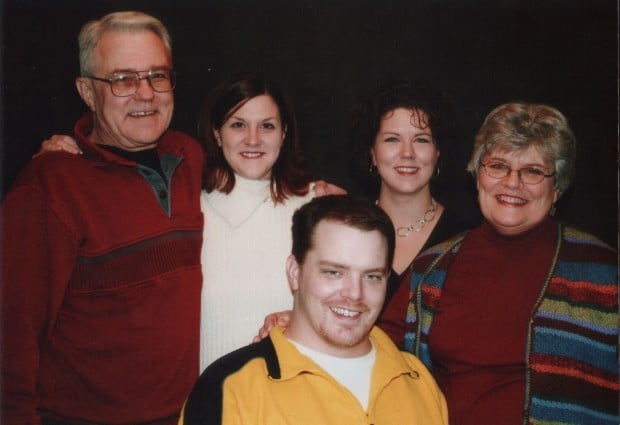

His sister found him lying on the floor of his duplex, dead from undetermined causes. More than a year later, Brad Bell's family still thinks his death was a homicide, but three medical reports came up with different answers.
On a Saturday afternoon, Mandy Bell walked up to the door of her brother's duplex and immediately knew something was wrong.
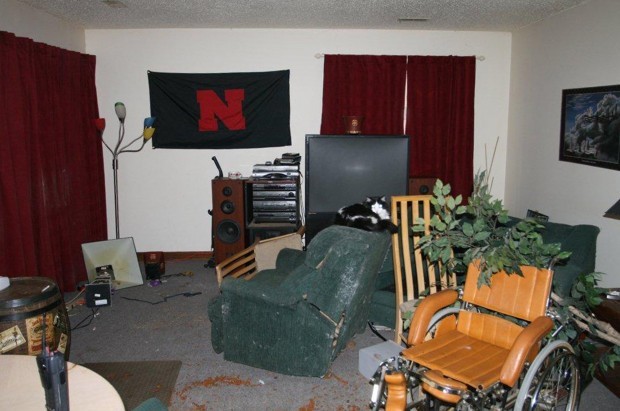
The door was unlocked, which was unusual, and was partially blocked by a barrel used as an end table. She could see the overturned furniture before she pushed the door open.
Inside, cat food littered the floor. Furniture was overturned, broken. Chairs had been moved out of the kitchen.
And her brother, who had been paralyzed from the chest down for the past 13 years -- the result of another boy's gun play when he was 15 -- was lying on the living room floor, nowhere near his wheelchair.
People are also reading…
Brad Bell was dead.
Nearly a year and a half later, just what happened in the northwest Lincoln duplex in early April 2009 remains a mystery, despite three pathologist reports and a thorough police investigation.
Two of those medical reports concluded the cause of Brad's death couldn't be determined. A third report by a pathologist hired by the family concluded he died of blunt force trauma and recommended further investigation to rule out homicide.
Brad's family is convinced someone killed him, because, they say, they know what he was physically capable of -- and it didn't include tearing his apartment upside down.
"I've tried to imagine it and I can kind of get part way there," said his mother, Sue Bell. "But moving all that furniture, turning it over, breaking it. I don't think God would come down and grant a miracle of that sort."
The family's conviction has left them at odds with the Lancaster County Attorney's Office, which relied on the conclusions of the Omaha pathologist with which it contracts for coroner investigations and the Iowa pathologist they asked to review the county attorney's and the family's autopsies.
Now, Brad's death certificate says the manner of death is undetermined. And that bothers the Bells.
"I would like it changed because we know someone killed Brad," Sue Bell said. "We want it classified a homicide because someone is getting away scott free."
And they think disregarding the condition of the apartment shows a lack of understanding of Brad's physical limitations. Brad's neurosurgeon wrote in a letter that he didn't think Brad could cause destruction of property or severe harm to himself.
"Where's the common sense?" asked Brad's sister, Stephanie Mason.
Chief Deputy Lancaster County Attorney Joe Kelly acknowledges there are unanswered questions and understands why the death certificate classification is so meaningful to the family.
But he said classifying the cause of death as undetermined on a death certificate doesn't prevent the police or county attorney's office from arresting or prosecuting someone if more evidence comes to light.
"That's a call we have to make," Kelly said. "It just means we found (the coroner's physician's) report to be the more compelling of the two. That's not offered as a criticism of the other."
Among the differences in the autopsies is the mention of bruising.
The first autopsy performed on Brad's body by Dr. Blaine Roffman in Omaha doesn't note bruises, though it does note sores commonly suffered by people who are paralyzed.
The second one, by Dr. Matthias Okoye, lists numerous bruises and abrasions, including some on Brad's forehead.
Okoye also dissected the throat and found a tooth lodged there, which family members say could have been knocked out during a struggle.
Okoye -- who was the coroner's physician for Lancaster County until officials didn't renew his contract last year to save money --suggests he may have been asphyxiated. Okoye also concludes that Brad's injuries didn't occur in a fall nor were they self-inflicted.
Over the past three years, the causes of death in two cases Okoye ruled as homicides were changed after experts disagreed with him, including a case in which prosecutors dismissed a felony child abuse charge against a day-care provider based on Okoye's conclusion the child died of blunt force trauma.
The third doctor in Brad's case, Jonathan Thompson in Johnston, Iowa, notes the bruises found on Brad's body but concludes they were not life-threatening.
Johnston suggests Brad may have had an altered mental state because of severe dehydration or starvation.
Family members don't buy the starvation/dehydration idea. And they feel that even if he didn't die of whatever caused the bruising, something happened.
The day of the funeral, Mason said, an employee there recommended they get a second autopsy because of all the bruising he'd seen.
Brad's family still thinks it adds up to homicide.
They just can't explain the condition of the apartment -- which Mandy had been over to clean the week before -- any other way.
Assistant Police Chief Jim Peschong said his investigators could not come up with anything to support that a crime had occurred, despite the disarray in the apartment.
And those investigators felt there were possible explanations for the state of the apartment, he said.
Any potential leads in the case have been checked out and exhausted, Peschong said.
"I'm here to tell you, If we think we have a homicide, we're all over it."
But family members want to make sure the case is kept active, and labeling it a homicide would help.
"We just feel it's more justice for Bradley," Sue said.
Reach Margaret Reist at 402-473-7226 or mreist@journalstar.com.


