



For a wild stretch during the 1990s, the body-building Bartling brothers were big -- big arms, big chests, big reputations.
They were the darlings of TV talk shows and romance novel covers.
But a dozen years ago they stepped off the stage and returned to their sow barns near Unadilla.
UNADILLA - The hog farmers had learned how to melt a crowd, autograph body parts and banter with Leeza and Montel and Maury.
But try to feed their sows in a season of $7 corn?
Protect their farm from the bad press that shook an industry?
"First, we had high corn prices," said Kris Bartling. "Last year, we got hit with the misnamed swine flu. Not a hog farmer out here who didn't get hit. It just took a big toll."
People are also reading…
And on top of that, the water tank just overflowed in the mudroom, the broker is calling -- and calling again -- and someone needs to truck this load of weaners up to Lindsay.
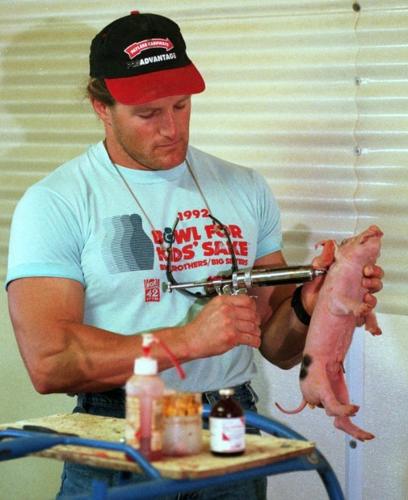
The glamorous life? Not anymore, not here in the dust and stink and 12-hour days at the Bartling Brothers Farm.
Not like it was for several years in the 1990s, when the long-haired Bartling Brothers -- Jim, Kurt and Kris -- posed for People magazine, posters, calendars and the covers of more than 100 romance novels.
Sometimes they dressed as Vikings or cowboys; sometimes they barely dressed at all.
They took frequent trips to New York. Spent a week in Florida. Appeared on national TV 40 times. Did a late-night talk show in Germany.
There was talk of movies, television projects.
But their entertainment career was taking them far from their farm, founded by their great-grandfather a few miles south of Unadilla.
And it was tough work.
They didn't know where they'd be from one day to the next, or what they'd be doing. They always had to look perfect, to be on.
And they were watching others make more money on the Bartling Brothers than they were making themselves.
"That business -- it's a dog-eat-dog business," said Kris. "You've got everybody trying to pull money out of your pocket."
So a dozen years ago, the brothers put their work clothes back on.
"I didn't really want to do that for the rest of my life, anyway," said Kurt. "And we had family, that's why we came back. Going back to our roots."
Home for good in Otoe County, they had plans to grow their farm into a big business.
They were going to leverage their name and their fame. They were going to start their own line of meat products, controlling both ends of pork production.
The brothers had the money they'd earned and the lessons they'd learned -- to think big, to think for themselves.
"In the entertainment business, we kept waiting for someone to take us by the hand and say, ‘This is what you guys need to do,'" said Jim, the oldest.
"But by not doing what everyone else did made us who we were. And that's how we did it in the hog business."
In short: What they'd learned in Nebraska helped them in New York. And what they learned in New York helped when they came home.
They'd hoped to build a farm big enough to provide careers for their own kids.
And they made progress, putting up buildings, buying land, growing more crops -- corn for feed, beans to sell -- and growing their herd.
In 1999, they had 500 sows; now they have 2,000, with sow farms in Burr and Johnson.
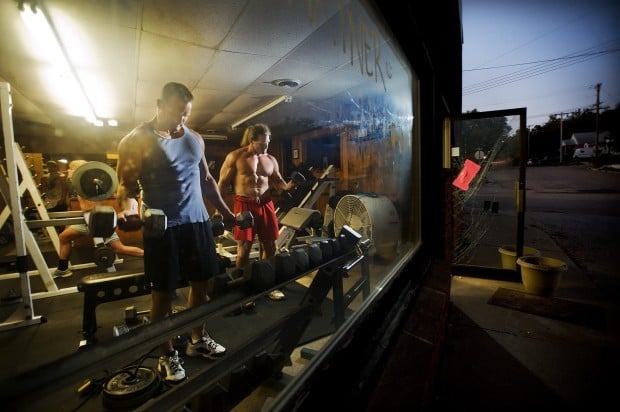
They bought a storefront on Unadilla's main street to house their offices -- and a gym.
"We got larger and bigger and added more contract employees and more workers all the time," Jim says. "We ran construction crews pretty much full-time all those years."
Farming can be tough work, too.
One year, you're suddenly paying more for feed. The next, swine flu headlines are cutting into your industry.
Then you're saying goodbye to some of your help and slowing your expansion plans and working harder.
"We're crawling out of that hole," Jim said. "But it meant losing men ... obviously, we work pretty much seven days a week now."
And while that -- having to "always be on" -- was the stressful part of the entertainment business, it's simply part of the job now, Jim says.
Because there's work to be done. Someone needs to push the dirty water into the floor drain. And haul the weaners to Lindsay.
When you're producing 48,000 pigs per year, you don't have much time to look back.
"We were fortunate enough to see a lifestyle that most people don't get to see and be treated like a lot of people don't get to be treated," Jim said. "I think we came out of it pretty well. We're the same guys."


