


For three nights in February 1985, Beatrice police sat in a motor home a quarter-mile from Pleasant View Cemetery near Pickrell.
They had planted a voice-activated tape recorder in a bouquet on Helen Wilson's fresh grave - and they hoped to capture the murmurs of a killer.
Earlier they had staked out the Beatrice widow's funeral, secretly snapping a picture of each mourner. They photocopied signatures in the guest book and collected names from flowers and cards.
If the man who raped and killed Helen Wilson on Feb. 6, 1985, was there - out of curiosity or in an effort to cleanse himself of guilt - they wanted to know it.
Within hours of the discovery of her body, Beatrice police launched an intense investigation, but it would come up cold and provide an opportunity for a farmer-turned-sheriff's deputy to crack the case.
People are also reading…
Decades later the three men and three women he helped send to prison made history of their own as the first people in Nebraska exonerated of murder by DNA.
The life that was taken
For all of the coverage that would follow, very little has been said about Helen Wilson.
The 68-year-old widow lived by herself, but she wasn't alone.
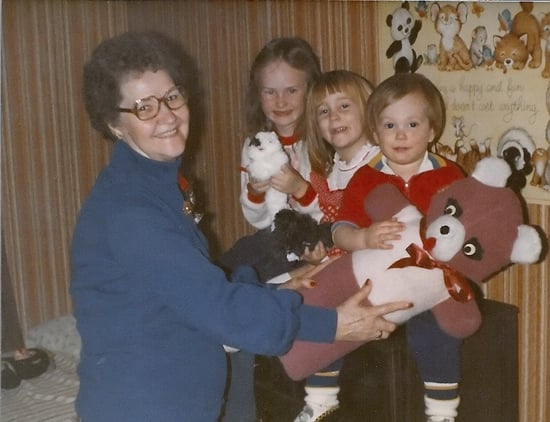
Family was important to her. She was born in summer 1916, the fourth of five children to a farm couple near Pickrell, just north of Beatrice. She sang and played ukulele in a band with her brothers and sisters.
"They called her Little Miss Sunshine," said her daughter, Jan Houseman.
In 1934, Helen Jones married Ray Wilson, who ran a metal press in the old Hoover factory while she cared for their three children. Ray died of a heart attack in 1966. He was 54.
The days that followed were the darkest of her life. She got a job at a nursing home, but her grief proved too much and she had a nervous breakdown. The sunshine gradually returned with the help of counselors and family.
She stayed busy cleaning houses, ironing clothes and baby-sitting at her church. She saved money for bus trips, usually to visit siblings in other states or her son Larry in Scottsbluff.
Otherwise, she loved a game of bingo, an occasional red beer and visiting with friends. But something else gave her greater pleasure.
"Her loves were her kids and family," grandson Bob Houseman said.
She wrote a poem for each of her seven grandchildren and five great-grandchildren, including this one to Stephanie Houseman, now Stephanie Meyerle.
"A blonde little head, on a pillow so white
A peek out of one eye, and my finger held tight.
Two angel feet outstretched from under cover
And I just think - I'm that darling's Great Grandmother."
Looking high and low
No one heard a thing when Helen Wilson was killed in her downtown Beatrice apartment during the early morning hours of Feb. 6, 1985.
Nothing.
In a trash can behind the building, Beatrice police found a paper bag containing papers belonging to Kathy Gonzalez, a 24-year-old kitchen worker who lived above Wilson. The bag also held a belt and two bras, one with a little blood on it. The contents were taken to the police department, tagged 10032 and placed in Bin A in the evidence room.
Gonzalez told police she had bought new clothes and thrown out some old ones.
But the blood on the bra would never be tested.
Investigators returned to the widow's apartment again and again, looking for fingerprints and collecting more items for forensic testing - a clock, a phone book, chimes from the front door, empty Miller beer cans from the kitchen trash.
A killer in their grasp
Six days after Wilson's death, the State Patrol's crime lab gave Beatrice police news: Blood found on a blanket, sheets and Helen Wilson's nightgown - and a speck on her panties - indicated the killer had Type B blood.
Wilson had Type O, so investigators concluded she drew blood from her attacker.
The finding was significant because fewer than one in 10 people are Type B.
Blood profiling was the most sophisticated forensic technique of the time, and tests showed Wilson's attacker was a nonsecretor. That meant enzymes from his blood would not show up in such bodily fluids as sperm and saliva. And because just 20 percent of people are nonsecretors, the field of suspects narrowed further.
In their search for a Type B nonsecretor, investigators took samples from dozens of people.
But their best lead walked into the police station 10 days after Wilson's death.
Mike Hyatt, a 23-year-old unemployed Beatrice man, told police he ran into a childhood friend the day Wilson was killed.
Hyatt said the friend, Bruce Smith, wanted to go home to Oklahoma but he had no money. Hyatt gave Smith $4 for his watch.
They met later at the R&S Bar and drank until midnight. Smith, 22, was horny. He said he hadn't "had any for quite some time," and he was determined to get some - one way or another.
They headed for a party at a trailer house about 20 miles away. There, Smith kept grabbing one of the hosts and telling her he wanted some action. Finally, he passed out in her roommate's bed and got tossed out of the party. On the way back to Beatrice, Smith told Hyatt he'd get even with everyone at the trailer.
Hyatt dropped his drunken, angry friend off at about 3:45 a.m. at Sixth and Courts streets - two blocks south of Helen Wilson's apartment. It was 6 degrees below zero, and Smith was headed north.
Smith went to grade school in Beatrice, and his grandmother once lived in Wilson's building.
Investigators jumped on the lead. An acquaintance told a Nebraska State Patrol investigator she saw Smith the next day - and he had scratches on his face and hand. Smith told her they were from a fight he had with Hyatt.
The investigator went back to Hyatt. There was no fight, he said.
Police talked to a woman whose wallet was stolen from the party in the trailer house. They found it, minus $60, in an alley near Wilson's building.
They learned a guy matching Smith's description had boarded a bus bound for Wichita, Kan., on Feb. 9, three days after Wilson's body was found. He wanted to go to Oklahoma City, the ticket agent said, but he didn't have enough money.
Police visited Smith's half-brother, whose wife said Smith had knocked on the door of their Beatrice home about 6:30 the morning of Feb. 6. She didn't let him in, she told investigators, because Smith scared her and she didn't trust him.
A couple of hours later, she said, Smith returned and she let him in to sleep. He told her his nose hurt because he'd been hit with a cue stick and had been in a fight the night before.
Police also found a convenience store clerk who ID'd Smith as the guy who had lifted a bag of potato chips early the morning Wilson's body was found. The clerk thought Smith had blood on his clothes.
On March 5, 1985, the patrol investigator asked for a court order to get blood, hair, saliva and prints from Smith. Then, he and a Beatrice cop headed south.
They learned from Oklahoma cops that Smith was a suspect in a 1981 rape there. And in 1984, Oklahoma City police had investigated a homicide that matched some of the characteristics of the Wilson case. Smith may have been in the area, they said.
The Beatrice investigators tracked Smith down on March 7.
Joyce Gilchrist, an Oklahoma City police lab technician who later would be discredited and accused of falsifying evidence in murder cases, tested Smith's blood and delivered the results: He was Type B - but he was a secretor, not what they were looking for.
The investigation moved on.
The case goes cold
Within three weeks, authorities had worked door-to-door in a 49-block area around Helen Wilson's apartment.
They went to schools and studied attendance records, compiling a list of kids who were absent on Feb. 6.
Within 12 weeks, they had interviewed 318 people.
Among them was a drifter from Alabama named Joseph White, who went by the nickname Lobo.
On March 2, White walked into the Beatrice Police Department, saying he heard the cops wanted to talk to him. He told them he didn't know anything about the Wilson case.
He pulled an Army ID out of his wallet. His blood type: O positive.
Over the next few months, police ruled out potential suspects through biological testing, fielded dozens of calls and chased tips.
By year's end, Beatrice Police Sgt. Sam Stevens tracked JoAnn Taylor to North Carolina.
But her former father-in-law said he'd booted her out for stealing, and the last time he saw her she was hitching toward Gastonia, N.C. A couple of days later, Taylor called Stevens and told him she had not seen White for months.
A year passed, and little of note happened in the Wilson investigation. In October 1986, a Beatrice cop filed a report that a blood-stained bra found outside Wilson's building had been destroyed as insignificant evidence.
The case had gone cold, so cold that on Feb. 1, 1988, Sgt. Stevens contacted Colorado psychic Dar Emme, who said she picked up a reading that a relative was responsible.
But police had been down that road, and ruled it out.
Reach Catharine Huddle at 473-7222 or chuddle@journalstar.com.


