





Mariah Nimmich could have used a monthly gift box sent to her with manuals and videos on budgeting when she left college last year.
After being hired by a Lincoln startup, the 23-year-old woman from Seattle struggled to make her student loan payments and pay her other bills.
In her view, Lincoln lacks financial management support for young professionals fresh out of college and burdened with heavy debt. But it provides great opportunity for growth and advancement for such people, she said.
“It’s definitely a community that gives back to you what you give to it,” she said.
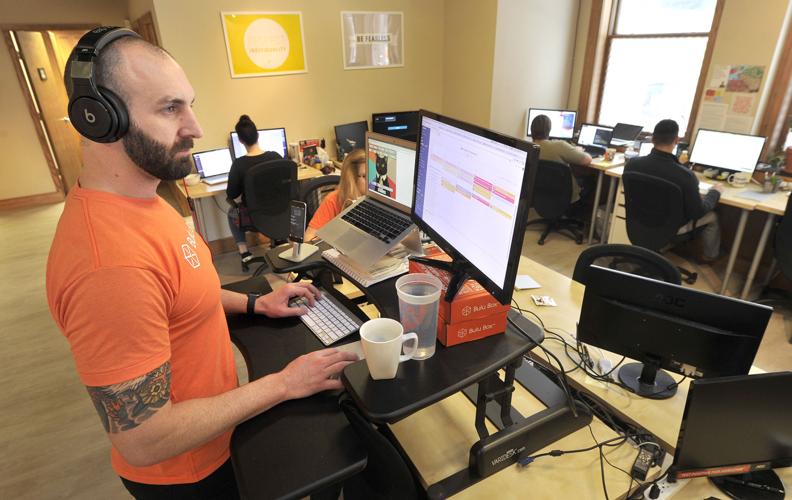
Nimmich is the public relations and marketing manager for Bulu Box, a service that sends a box to subscribers each month with samples of health, nutrition and weight loss products.
She's one of a growing army of young professionals coming to Lincoln to join an increasing array of startups -- companies like Powderhook, an app that allows users to find nearby places to hunt or fish, and Hudl, which makes video-editing software for football and other sports.
People are also reading…
In the first six months of last year, total publicly reported venture capital investments in Lincoln companies topped $80 million. In all of 2014, startups in the area brought in less than $4.6 million in venture capital investments, according to data compiled by PricewaterhouseCoopers LLP and the National Venture Capital Association.
That ranked Lincoln 118th out of 160 metro areas that had companies that got venture capital deals in 2014.
Those statistics alone provide strong evidence Lincoln is doing something right when it comes to supporting startups.
But what can it do better? Four employees and executives of local startups shared their thoughts on that topic.
Paul Jarrett, who co-founded Bulu Box with his wife, Stephanie, said they launched the company in San Francisco before moving it to Lincoln four years ago, despite solicitations from officials in Colorado and Kansas.
“We really liked the people,” he said. “We can be really close to the university.”
Quickly, they realized much work remained to strengthen Lincoln’s startup community.
Lincoln lacks access to the kind of professional talent needed to staff tech startups like Bulu Box and also lacks significant government support by way of tax breaks.
But it has plenty of great ideas and entrepreneurs willing and able to make those ideas a reality, he said.
“It’s shocking how it has grown over the last four years, with the lack of funding, with the lack of talent, with the lack of government tax breaks,” he said. “It’s really surprising to me that it’s done so well.”
Lincoln should consider ways to foster the startups it already has and find the next Hudl, Jarrett said, noting that only one in 20 is generally as successful as Hudl, which received a $72.5 million venture capital investment last year.
“The biggest thing against us is just time,” he said.
Eric Dinger, CEO and founder of Powderhook, said local business leaders have grown to appreciate startup companies over the past four years or so and business leaders have started hosting events to generate support and networking opportunities.
The next step for improving the city’s startup community involves encouraging founders to sell their companies to larger ones and then reinvest in new businesses, Dinger said.
That process would grow local capital that can be used to generate new companies, he said.
“It’s started to happen, but we’ve got a long way to go.”
Nimmich said many startups are connected to the University of Nebraska-Lincoln, which provides them with a steady supply of interns and grants.
One of the weaknesses of Lincoln’s startup community is that salaries are smaller than those at similar companies in larger cities. Budgeting advice would help young professionals starting their careers at local businesses, Nimmich said.
Martin Hogan, manager of community engagement for Powderhook, said he was his company’s first intern. Working for a startup can provide better experience for young college students than working for more established companies that don’t need as much help, he said.
“As an intern, I worked on so many different areas of the company that I wouldn’t get (to) at a desk job working as an accountant intern,” he said.
Hogan said new restaurants and bars in the Haymarket provide an enjoyable social experience for young professionals. And he said he’s looking forward to new businesses once progress is made on the Telegraph District, a 60-acre housing and retail project slated for west of Antelope Creek and north of Lincoln High School.
“It’s definitely becoming a better place to live for people, especially young people,” he said.