
We’ll be driving to Lincoln’s No. 3 economic engine -- behind the university and state government -- so buckle up.
We don’t want to end up at the hospital.
Well, that was a fancy bit of misdirection. That's exactly where we're going.
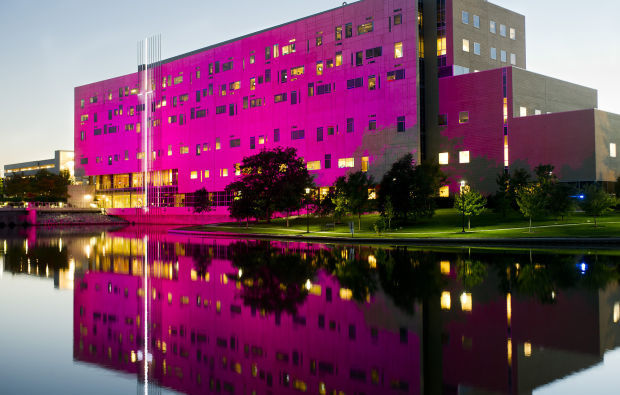
Few people waiting in the traffic clogging 48th and A streets, ever think much beyond the healing that takes place inside Bryan Medical Center.
They should. It employs more than 4,000 people drawing $240 million in annual payroll, not counting benefits. That includes 1,284 registered nurses in a region where the average RN income is $66,830.
Salaries represent just 51 percent of the medical center's budget.
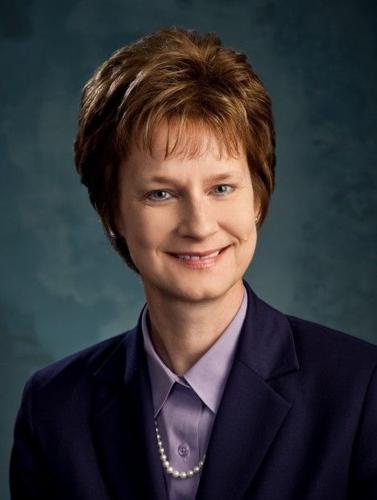
Health system CEO Kim Russel frequently exits a driveway here to share the news of her hospital's economic contribution.
People are also reading…
“That’s such a huge part of my plate,” she said recently, “educating other leaders in the state about the importance of the health-care sector.”
Roughly $13 billion of Nebraska’s $110 billion economy belongs to health care. Nationally, one in every $6 spent on anything goes toward health. Russel expects that share to grow.
Across Nebraska, hospitals keep 41,000 workers occupied. Just more than half of them are directly employed, doing everything from moving scalpels through autoclaves to wheeling crash victims into radiology. The rest are employed doing things like building interior spaces, tearing old spaces down. They also deliver artificial knees to loading docks, expand hospital parking lots.
Bryan's economic reach extends well beyond Lincoln, stretching to Valentine in the north, beyond the Tri Cities to the west and into Kansas on the south. It even reaches beneath the soft belly of Omaha to Clarinda, Iowa, and northwest Missouri.
People find it easy to drive Nebraska 2 into Lincoln, Russel said. They'd rather not attempt metropolitan Omaha's freeways.
Turns out, there’s a lot of driving involved in health care.
Altogether, 24 percent of patients who come to Bryan will travel from beyond the primary service counties of Lancaster, Gage, Saline and Seward, said Bob Ravenscroft, vice president of advancement and chief development officer. A similar portion of employees commute from beyond the city boundaries, he said.
One man's journey
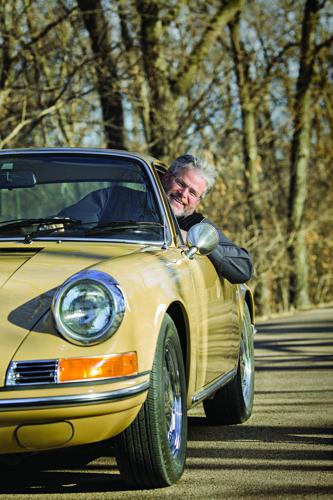
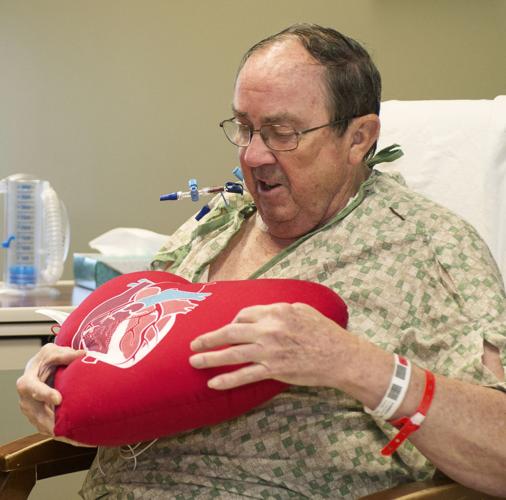
Dave Hart, 63, a self-described country bumpkin from rural Doniphan, made the 90-mile trip to Lincoln for health care three times in 2014. His family doctor started him down the road to address a twittering heart.
The errant electrical impulses spinning out of his pulmonary veins were turning his heart's atrium into a terrible dance partner. Dr. Pradipta Chaudhuri of the Bryan Heart Institute in Hastings pinpointed the cause of the atrial fib.
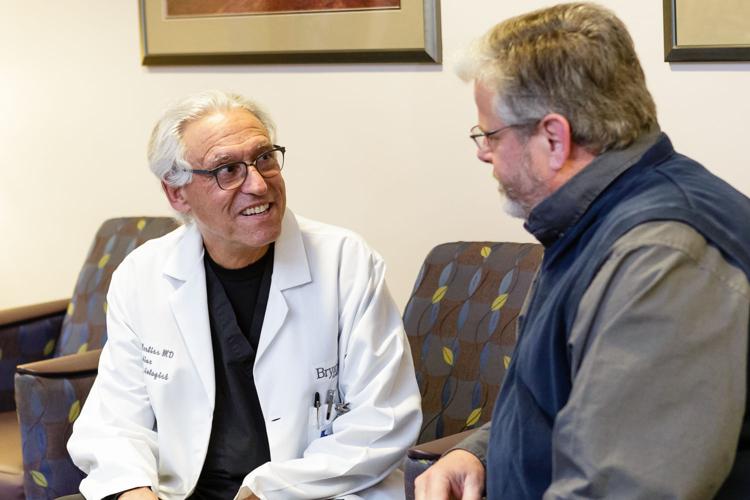
Hart then drove to see Dr. Andrew Merliss at Bryan East Campus. Merliss specializes in heart circuitry, fixing electrical metronomes.
Merliss suggested he freeze a ring of tissue around the area of errant sparks. The doctor spends his days driving tubes through arteries into hearts, checking an X-ray GPS to make sure they reach the right parking spot.
Merliss scheduled Dave Hart's procedure to begin at 5:30 a.m.
The night before, he and Dee, his wife of 41 years and mother of his two children, drove to Lincoln and checked in at the Holiday Inn Express on Nebraska 2.
Dave was feeling apprehensive. They didn't go shopping, but they did stop at Lazlo’s South for a spinach salad.
“It’s not like a joyous occasion,” he said. "You have to get up so early. And they’re going to perform a procedure on your heart."
He and Merliss had shared a frank discussion about the possible outcomes during an earlier visit to Lincoln.
“I'm in the people-pleasing business with my work," said Dave Hart, who owns Hart Floors Inc., refinishing and installing wood basketball floors. "It’s important to be brutally honest with people.”
In Merliss, he said, he found a kindred soul “of the old school -- under promise and over deliver."
Lincoln's health-care neighborhood
So far on these travels, we've seen the economic scope of just one hospital and peeked at the economic contributions of rural patients.
We've barely touched Lincoln's health-care neighborhood.
Across town, the 2014 tax data for CHI St. Elizabeth places revenue at about half of Bryan's.
Lincoln also boasts of physician-owned surgical hospitals, plus stand-alone hospitals for hearts and rehabilitation.
The state's licensing system lists 715 active physicians in Lancaster County, ranging from Dr. Nadia Abraham to Dr. Paul Zuercher.
And anyone who has convalesced after a hospital procedure, watching medical bills pile up in the purgatory of personal finance, knows that in addition to bills from hospitals they should expect statements from surgeons, anesthetists and pathologists -- usually independent contractors.
There are also pre-op visits. And that pile of pill containers on the nightstand represents a pretty penny, as does the durable medical equipment, such as the scooter or bone stimulators. There's also a cost for the physical therapist who gets them standing. Insurance workers take a cut, too, as does a third-party administrator who processes all that paperwork.
Somebody created the advertising that helped the patient choose one hospital over another. And, presumably, somebody even got paid to write this health article.
Somebody had to drive the blood bank van. Somebody else kept the hospital computers working, because should they go down, everything would be unbilled.
In good times and in bad, this large health-care engine stabilizes Lincoln's economy. Even in this agricultural state, there's little change in the operating room traffic regardless of whether corn sells for $7 a bushel or its current $3.25. The main accommodation for farming involves the spate of knee replacements delayed until after harvest.
One might think, therefore, that hospital administrators would be like truck drivers, watching it all roll beyond the windshield. That would be a fallacy. At universities like Stanford and Duke, researchers are developing immunotherapy protocols that will change cancer treatment. Others are building better surgical robots, scanners, genetic tests.
Lincoln doctors regularly bring forward ideas that require new paths, plus the incumbent planning, construction, employment and training. Down in the Haymarket, fresh college grads look for ways to integrate Fitbit data into patient monitoring, changing more.
And patients demand new services. Who would have thought that people in Lincoln would start requesting fecal transplants? Russel, Bryan’s CEO, marveled, quickly adding that that's indicative of their level of suffering.
There's a symbiotic relationship between hospitals, physicians and supporting staff. Good doctors seek to practice in communities of other good doctors and around competent, well-equipped hospitals.
In cities such as Nashville, Tennessee, and Sioux Falls, South Dakota, a confluence of capital and leadership has created regional health-care magnets. Lincoln, too, offers some services that draw patients from beyond the region.
For officials driving the hospitals, meanwhile, federal and state government can be counted upon to unexpectedly lay down roadblocks or set up detours. Russel recently opened one email to learn Medicare had begun a five-year pilot program in 75 hospitals that would change the method of payment for total knees and hips. Lincoln was on the list of 75.
It was as if a financial blizzard had descended on her road. Medicare makes up a third of hospital income. Knees and hips contribute a fair share.
The new Medicare pilot will gather data on the cost of procedures, plus 90 days afterward. Medicare will determine later what the appropriate total cost of a knee or hip should be, reclaiming money it overpaid and rewarding what it underpaid.
Even in this financial whiteout, Russel said, “The change will have no impact for the patient.”
Meanwhile, the state's Legislature looks ready to again reject annual income potentially allocated under Obamacare. With each passing year, Russel said, Nebraska leaves $700 million of economic activity on the table.
“The rub of it,” she adds, we all pay taxes, corporations pay fees, to support the Affordable Care Act. “That’s why in some states that have passed reform, political leaders see it as an economic issue."
As the years pass, the health-care road keeps growing, the speed increasing.
A person who gains admittance to a hospital today must be far more fragile than he or she was just a generation ago. The average patient stay at Bryan stands at 4.3 days, but that includes outliers, such as premature babies that stay weeks or months.
Bryan has plans to grow. It recently cleared land between A and Everett, 50th to 51st -- but officials aren’t ready to detail the plans.
Some recent expansions reflect a cultural transformation, Russel said. People want all-private rooms. Meanwhile, CT and MRI scanners didn’t commonly exist before 1980.
In 2015, the hospital treated 99,155 patients, including some more than once. There were 11,436 unique inpatients, accounting for 28,895 distinct hospital stays. There were 87,719 unique outpatients accounting for 168,786 outpatients appointments. And of these, 11 percent came from outside the four primary service counties.
A success story
Dave Hart's excellent results have sold him on Bryan and on cryoablation.
"We hit a home run," Merliss told him during his follow-up, he said.
His heart has a normal sinus rhythm, and he takes no blood thinners.
He doesn’t always come to Lincoln when he needs health care. A total left knee replacement he got at Mary Lanning Healthcare in Hastings was top-notch. His son, Dr. Jonathan Hart, is a Hastings radiologist.
But when it came to his heart, “I had to take the advice of experts,” Dave Hart said.
His physician son said, “Dad, have it done.”
He felt comfortable with Merliss and with Bryan.
“I think that Bryan is probably near the top for health care,” Dave Hart said.
The highlight of his stay was the Colby Ridge popcorn a nurse fetched from downstairs following his procedure.
On the way out, he said, he bought a second bag of it and stopped at the lobby for a Starbucks.
He'd come back.
His father, incidentally, was born at Bryan Memorial in 1915. Rowland Hart was a premature twin. The other twin died. Rowland weighed just 3.25 pounds, his son said, and they placed him in a shoe box next to a radiator.
He marvels at the progress made in a century.
Now that’s been a long and fortunate drive.