


Lincoln has a green underground -- not a subway system like New York or London, but geothermal heat pump systems buried under soil, parking lots and playgrounds all over the city to help heat and cool buildings.
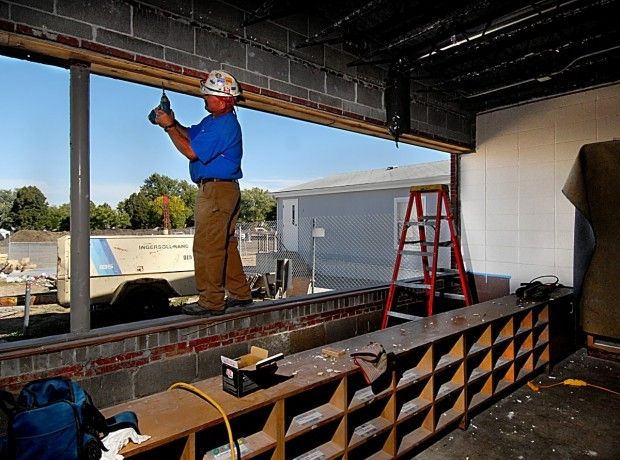
Lincoln Public Schools has installed geothermal heat pump systems in 45 of its 60 buildings, said Scott Wieskamp, director of facilities and maintenance.
"It just makes sense," he said. "Geothermal is a perfect application for educational facilities."
Geothermal heat pumps use the Earth’s natural heat to provide heating, cooling and, often, water heating.
LPS installed geothermal heat pump systems in Campbell, Cavett, Maxey and Roper elementary schools about 15 years ago.
Each school has a closed-loop system made up of a network of deep wells and pipes. In the summer, warm water is cooled as it moves through the buried plastic pipes because the ground has a constant temperature of about 55 degrees. In the winter, cool water is warmed to the same temperature.
People are also reading…
"We have more than 4,000 borings (or wells) in the city," Wieskamp said.
LPS has not tabulated the savings, but it has compared the annual energy costs of the four elementary schools to two middle schools -- Scott and Lux -- built around the same time but with traditional forced-air heating and cooling systems.
The annual energy cost for the elementary schools is 70 to 90 cents a square foot. The middle schools average $1.20 to $1.40 per square foot, Wieskamp said.
The school district also installed lighting controls and carbon dioxide sensors and used recycled materials in many of its new and renovated buildings, he said.
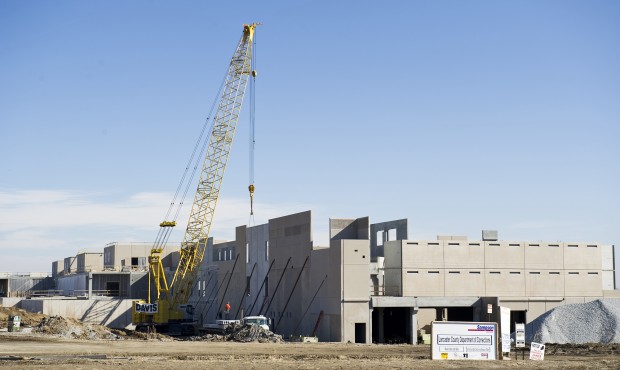
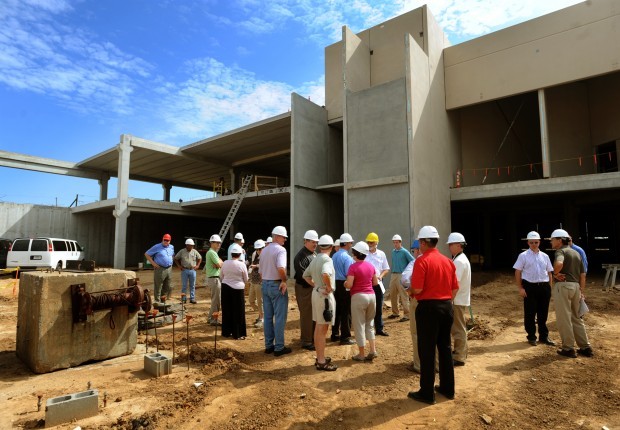
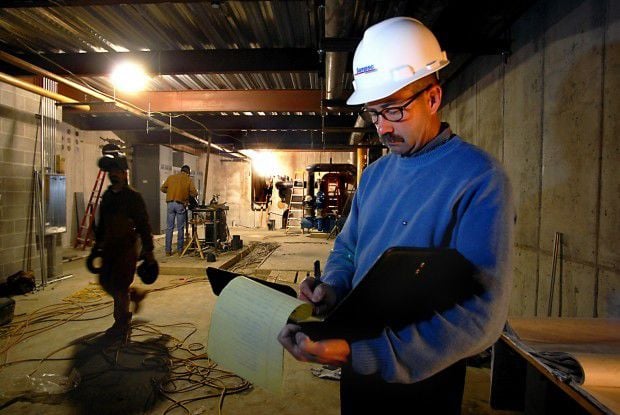
Lancaster County also is taking advantage of the potential energy savings offered through a geothermal heat pump system by installing one at the jail being built near Southwest 40th and West O streets.
A network of 300-foot wells is being drilled near the site by the District Energy Corp., a nonprofit entity that provides efficient, low-cost utility services for the city, county and state. Problems arose recently when 145 wells turned out to be the wrong size. The problems are being resolved.
DEC Project Manager Krishna Amancherla has estimated the geothermal system will result in an annual energy savings of 25 to 30 percent, compared to a conventional mechanical system.
Geothermal wellfields are not cheap. Total cost of the jail wellfield is between $2.5 million and $3 million, with as many as 667 wells on the site.
Not everyone has jumped on the geothermal bandwagon.
Assurity Life Insurance Co. decided not to install a geothermal heat pump system in its 175,000-square-foot headquarters building being built in Antelope Valley.
"Energy in Nebraska is really pretty cheap compared to the East and West coasts. When you run the numbers, the payback is so way out there for geothermal," said William Schmeeckle, the company's chief investment officer.
Assurity estimated it would take more than 50 years to recoup its investment in a geothermal heat pump system. He said that was fine for schools and other governmental entities but not for an insurance company and its policyholders.
"We could not justify it," Schmeeckle said.
But Assurity has found other ways to go green. Huge ice storage bins will be built in the basement to help cool the building in the summer. Ice will be generated in the late evening hours when demand for electricity is low.
"Half our basement is ice storage bins," Schmeeckle said.
Rainwater will be collected from the roof of the Assurity building, stored in a 180,000-gallon underground cistern and used to water landscaping, Schmeeckle said.
Assurity's goal is to achieve LEED gold certification for the building through the U.S. Green Building Council's rating system for sustainable design and construction.
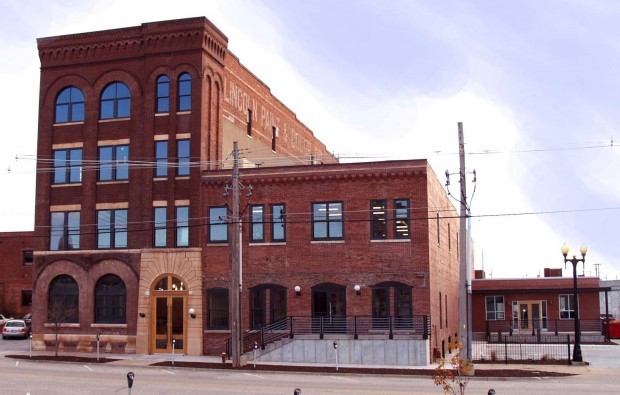
Ayars & Ayars' corporate office at 2436 N. 48th St., known as 48 Rock, is LEED gold registered, but not certified.
Thanks to a 30 percent federal tax credit passed by Congress last year, homebuilders are installing more geothermal heat pump systems in and around Lincoln, said Mike Rezac, owner of Rezac Construction.
Rezac and a partner built The Bridges, the state's first totally geothermal neighborhood near Southwest 27th Street and West Denton Road. Four homes have been completed, three are under construction and two are in the planning stages.
"Some are incorporating solar as it becomes more affordable," said Rezac, who built the first state-certified green home in Lincoln in 2003. Now he builds two or three a year.
Rezac believes adding geothermal heat pump systems and other green amenities to homes, even in a sluggish economy, is something people want because of the energy efficiency and potential energy savings.
His company takes a holistic approach to building green homes, focusing not just on geothermal systems but also on windows, doors, insulation and the use of recycled materials.
Said Rezac: "I tell people green building for me is to show you ways to keep that green dollar in your pocket."


