
Before the advent of smartphones, there was the fuel card and pay phone.
So to keep track of its over-the-road truck drivers as they crisscrossed the lower 48 states, Crete Carrier Corp. would leave a gentle reminder for its employees to “please call” whenever they stopped to gas up.
“Early on, you really couldn’t even get ahold of a driver,” said Crete Carrier CEO Tonn Ostergard. “We would put a hold on the fuel card with a note to call, but you never knew when that was going to happen, and even then, drivers would have to find a pay phone.”

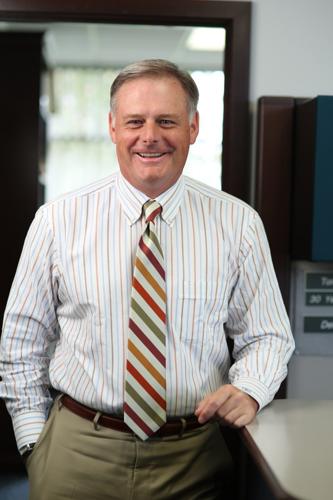
Tonn Ostergard, Crete Carrier president and CEO.
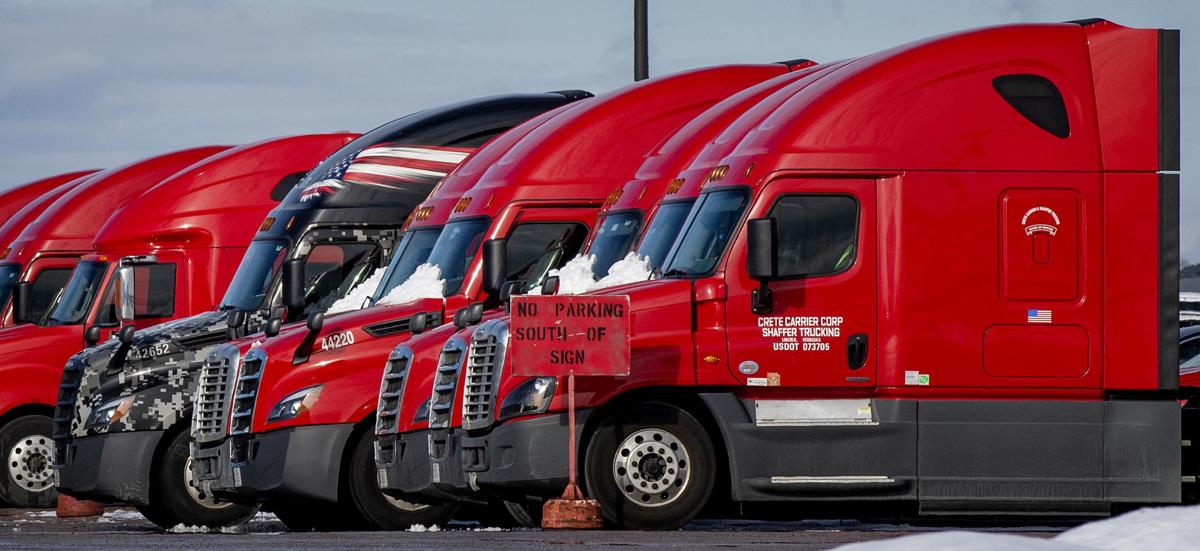
The information age has ushered in up-to-the-minute reports from its drivers and their rigs, and allowed Crete Carrier to evolve from six leased trucks running shipments of Alpo dog food out of Saline County to one of the largest transportation companies in the world, boasting a fleet of 5,000 trucks and 13,000 trailers from its Lincoln headquarters.
People are also reading…
But despite all the advances in technology, Ostergard said trucking remains the same at its core.
"It's a people-intensive and people-sensitive business," he said.
While people remain at the heart of the supply chain industry, technology has facilitated greater advances in productivity, safety and comfort.

Crete Carrier, based in Lincoln since 1973, began in Saline County with six leased trucks running shipments of Alpo dog food.
Today’s trucks are essentially their own mobile communication centers, transmitting progress in real time to an operations center at Crete Carrier’s home base near Interstate 80 and Northwest 56th Street, where it's been since 1973.
That benefits Crete Carrier’s customers, who expect raw materials to be delivered to manufacturers on time or finished goods to fill a warehouse or restock a retail store, as well as its employees, which Ostergard said the company views as customers, too.
“We utilize an optimizer that takes data about all available loads and trucks and develops a solution that takes care of the customer’s needs as well as the driver’s,” explained Ostergard, who has led the company since 1991.
“If a driver wants to be home on a certain date, it takes several days of advance planning to get them in the right spot so they can be home when they need to be home," he added.
The technological advances at Crete Carrier’s “nerve center” have been matched by the trucks themselves that operate in the U.S., Canada and at the Mexican border.
Predictive cruise control, a similar system to that available in many newer car models, anticipates changes in the road terrain or traffic and adjusts the truck’s performance to match, saving wear and tear on the engine and improving efficiency, Ostergard said, while safety systems such as collision avoidance help reduce over-the-road incidents.
Adapting to new technology to ensure it remains competitive in a changing economy is nothing new to Crete Carrier.
Duane and Phyllis Acklie purchased Crete Carrier in 1971 and moved it to Lincoln, later adding Shaffer Trucking and Sunflower Carriers to provide refrigerated trucking services.

Duane Acklie served as an attorney for Crete Carrier in 1966 when it was incorporated in Crete. He purchased the company with wife Phyllis in 1971.
A quarter-century later, in 1999, Crete Carrier purchased Hunt Transportation and launched its flatbed hauling division, allowing it to deliver heavy agricultural equipment and other specialized items.
As technology creates new opportunities for Crete Carrier — digital shopping through retail sites has increased demand for shipping goods, for example — Ostergard said the company will continue to lean into the changes.
But he doesn't see that technology ever replacing the need for human drivers, route designers and account managers who are key to completing the global supply chain.
“That supply chain is highly connected and we’re one of the links in that chain that helps ensure that,” he said. “For the vast majority of the products, if you bought it, a truck brought it.”

Crete Carrier marked 50 years in business in 2016 by awarding trucks to five of its drivers, including David Curtiss (left), who pulls the horn on a new, custom-wrapped truck presented by CEO Tonn Ostergard.
Reach the writer at 402-473-7120 or cdunker@journalstar.com.
On Twitter @ChrisDunkerLJS

Chris Dunker | Lincoln Journal Star
Higher education/statehouse reporter