




Ellery Davis, one of the founders of what would become Davis Design, lost out to Bertram Goodhue to design the Nebraska State Capitol.
That setback, however, was one of a few for Davis and the architectural and engineering firm he co-founded.
In the 100 years since its formation in 1912, Davis has designed, either on its own or in concert with other firms, some of Lincoln's most well-known structures.
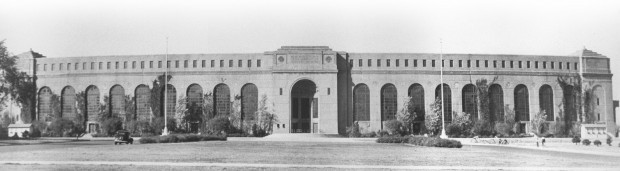
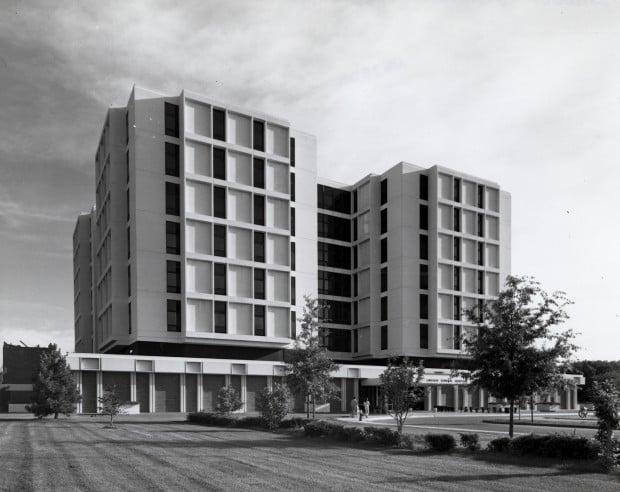
The list includes Memorial Stadium, the NU Coliseum, Lincoln High School, Bryan Memorial Hospital, Lincoln General Hospital, the Stuart Building, the Miller & Paine Building, Pershing Auditorium, Seacrest Field and the terminal at the Lincoln Airport.
Now, as it embarks on its second century, the oldest continually operating architectural firm in the state plans to go back to its roots, in a sense.
People are also reading…
In late March, Davis will leave its current offices at 211 N. 14th St. and move into 18,000 square feet of space on the sixth floor of what's now called the 1221 Tower.
It's the office complex on the south side of N Street between 12th and 13th streets that formerly was the headquarters of TierOne bank.
Davis designed one of the buildings in the complex for another bank, Continental National, and also did design work for renovations on the entire complex a decade ago.
"It's a remarkable opportunity for us," said Jim Stange, former president and former chairman of the board.
Current President Matt Metcalf said the move is not really related to growth or a lack of space; instead, he said, it's more of a logistical move.
In the new building, the company's offices will all be on one floor -- it currently is on three -- which will help with collaboration in the design process, Metcalf said.
In addition, its current building needs upgrades, which means it would have to spend money and do renovations even if it were to stay put.
Another reason to move is that the landlord of 1221 Tower is a Davis Design client.
Metcalf said Davis had one other reason for moving, although it's a bit less practical.
"With the 100-year anniversary, it kind of makes sense to do something big," he said.
Doing "something big" is a bit out of character for the firm. While Davis has designed many large Lincoln landmarks, it prefers to stay a bit under the radar.
Wade Stange, chairman of the board and Jim Stange's son, said the company gets much of its work through referrals and word of mouth, with about 80 percent of its business coming from repeat clients.
Those sorts of relationships helped the firm weather the recession pretty well. Metcalf said the company did have to tighten its belt a bit, but it avoided large layoffs, which is saying something in an industry that has been among the hardest hit by the recession and housing downturn.
A recent Georgetown University study, titled "Hard Times: College Majors, Unemployment and Earnings," found that graduates with architecture degrees have the highest unemployment rate of all college graduates, at nearly 14 percent.
Metcalf said the numbers are actually worse for experienced architects, with about one out of every four unemployed.
Another change brought on by the recession is that the firm had to refocus to keep work coming in, doing some smaller projects and also teaming with other firms on other ones.
"As a firm we weathered that period real well," said Mike Wachal, Davis's chief financial officer and one of two engineers among the firm's principals.
He said that despite tightening the reins, Davis was able to keep people employed and working, which was a benefit once the recession ended.
"Our backlog (of projects) today is as good as it's been for five years," Wachal said.
That large stable of projects has come despite an increase in competition.
Metcalf said that over the past four or five years, there has been a noticeable increase in competition, mostly from Omaha firms opening Lincoln offices.
He attributes that largely to all the large Lincoln projects under way or planned, including Antelope Valley, the Pinnacle Bank Arena and Innovation Campus.
But Metcalf said Davis Design's combination of services, along with its reputation and history, will always give it a leg up.
"I don't think there's any doubt we'll be here another 100 years," he said.


