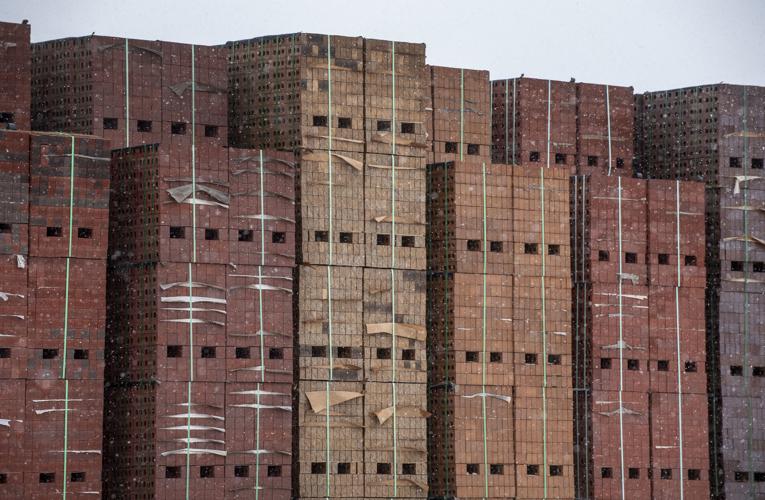

Just outside the town of Endicott, near the Kansas border, thousands of bricks are made every day that will be used to build schools, hospitals, office buildings, museums, stadiums and more throughout the U.S. and Canada.
Endicott Clay Products has been producing bricks at its plant in Jefferson County for 100 years, celebrating a century in business Jan. 6.
“I’ve told a lot of people in the last month that our directive at this point is to make sure we get to 200,” said Ryan Parker, who joined the company in 1999 and has been president and CEO for the past 10 years.
All indications point toward that being likely. In recent years, the company has updated and expanded its facility, added 35 employees — bringing the total to just more than 300 — and been involved in a slew of high-profile projects.
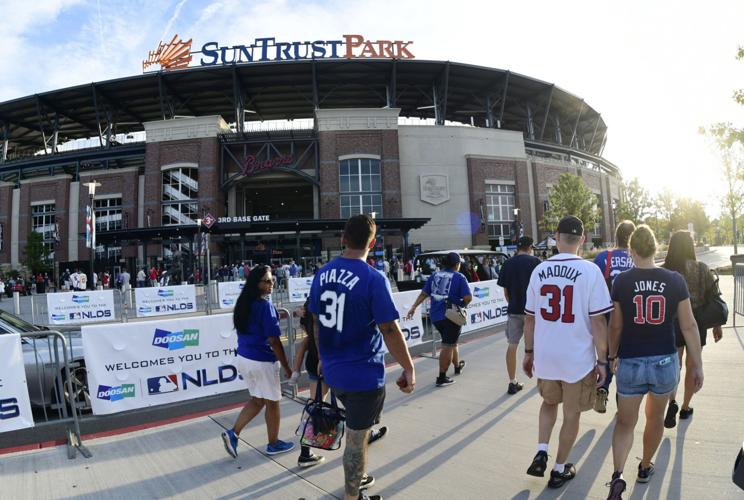
In the mid-2010s, the company made the bricks that were used to build Truist Park (previously named Sun Trust Park), which is the home of the Atlanta Braves.
People are also reading…
“That was a fun job for us as a company,” Parker said. “Their existing stadium, which they built for the Olympics, was not really that old. But it’s kind of an arms race when it comes to stadium development. So not only do they want a stadium, but they also want an entire retail, restaurant and hotel hub to be around those.”
Endicott Clay Products worked closely with the architect and owner of the Braves to come up with a unique blend of colors and textures for the stadium’s bricks. In all, it was about a four-year process, Parker said.
“I was a little bit skeptical of the blend, once it was specified,” he said of the mix of red and gray bricks that were used. “But once we put it together and got it to the job site and saw how beautiful it was, I was blown away.”
Another exciting part of that project for Parker was when Eustis Morris, the mason who handled bricks at the Braves' former stadiums, Fulton County Stadium and Turner Field, laid the first brick at Truist Park. Also laying Endicott bricks at that ceremony were Hall of Famer Hank Aaron and Braves All-Star first baseman Freddie Freeman.
“All of those things were really special for us to be a part of,” Parker said.
The number of bricks that go into large-scale projects such as stadiums and arenas can vary widely. For example, about 2.5 million Endicott bricks were used to build Lucas Oil Stadium, where the Indianapolis Colts play, while about 200,000 Endicott bricks went into Empower Field at Mile High, the stadium the Denver Broncos call home.
Locally, the company has provided bricks for both the North and East Stadium expansion projects at Memorial Stadium, in addition to bricks recently added to the façade of West Stadium and the pavers that surround the field. Endicott also supplied the bricks for Lincoln Southwest High School when it was built in the early 2000s.
“I think there are tremendous advantages to building with brick,” Parker said. “Especially for a school, when you look at safety and security and fire resistance and all the thermal benefits brick gives you over competing materials.”
He credited family co-owners Stanley Judd, Paul Judd, Mickey Judd and Cynthia Martinez for the company’s consistent growth and success. The Judds live in Fairbury, while Martinez lives in Lincoln.
“Over the years, one of the things that I’ve always enjoyed about our company and our ownership is the commitment to reinvest back into the company,” Parker said. “They’re really committed to Nebraska and committed to our community.”
To that end, Parker said Endicott Clay Products hopes to continue expanding, with tentative plans for more updates to the facility this year and next. He said being able to find hard-working employees, while challenging in recent years as rural populations have declined, is what makes the company so successful.
“The employees that we can find here are second-to-none,” Parker said. “The commitment to doing things the right way every time, commitment to quality and understanding that they’re part of a process where the buildings that our product is going into will last lifetimes. I think the people that are here embrace that, and that is a really fulfilling thing for us to know.”
Access to employees with that Midwestern work ethic is just one of the benefits to doing business in rural Nebraska. Another big plus: The clay itself is in the backyard.
Endicott Clay Products sits on a clay deposit that runs from Kansas to North Dakota. The company mines four different sites — two within seven miles of the plant in Nebraska, and two in northern Kansas that are within 25 miles of the plant. From those deposits, the clay is taken to the Endicott facility, where machines grind it to a consistent particle size.
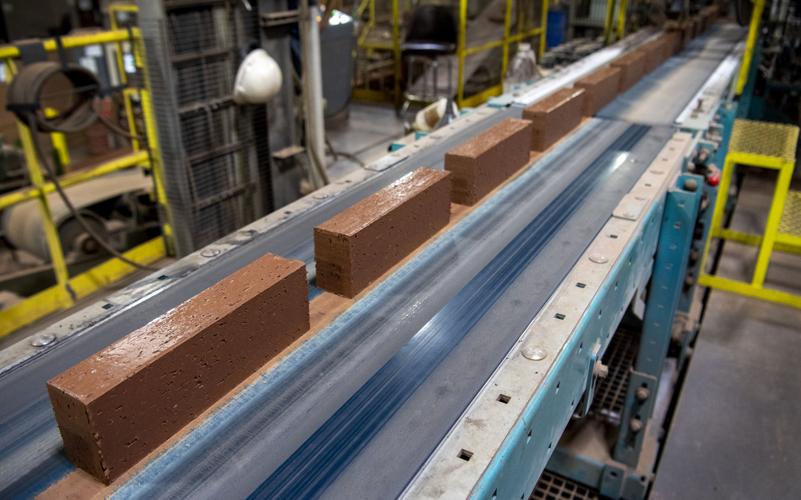
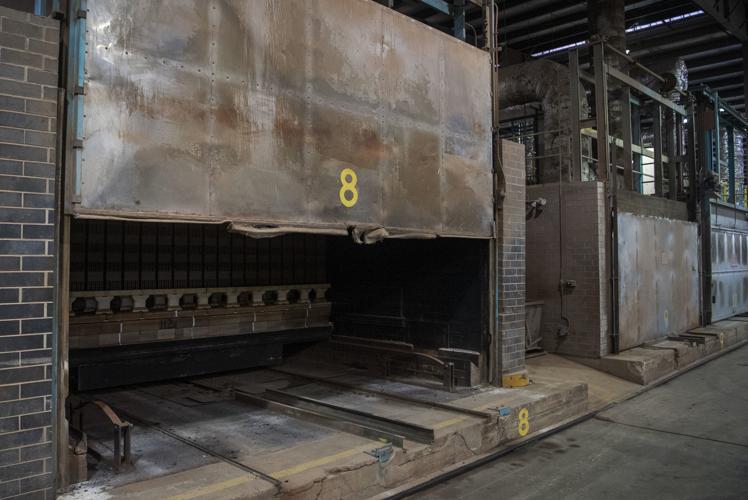
From there, the clay is sent through an extruder (think of it like a giant Play-Doh toy), cut to a specific size and sent to a dryer, where it will stay for a little more than two days. That removes almost all of the moisture from the bricks, which then go into one of four kilns, where the bricks are fired at about 2,200 degrees.
Along the way, certain additives help to change the color of the bricks.
“(The kilns) are a lot like having four kids,” Parker said. “They’re all just slightly different even though they’re coming from the same company, and certain kilns lend themselves to being able to do certain colors better than others.”
The finished bricks will be used not only for flashy stadiums and high-rise apartment complexes, but also simpler buildings, such as gas stations and laundromats and Dunkin' locations all over the country.
“We’re focused on making the absolute best brick we can,” Parker said. “We’re proud to be here and proud of what we do.”

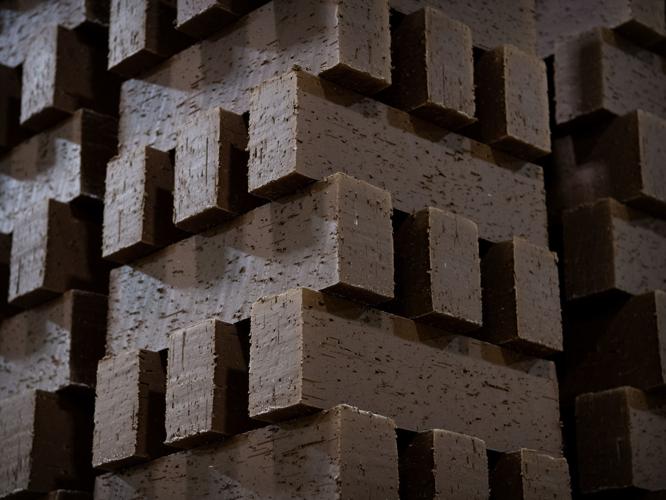
Endicott Clay Products has been producing bricks at its plant in Jefferson County for 100 years.

Parker

Endicott Clay Products provided the bricks for the Atlanta Braves' new stadium that opened in 2017.

Finished bricks of different colors are stacked, awaiting shipment via rail or truck from Endicott Clay Products.

In each of Endicott Clay Product's four kilns, soft-clay bricks are fired at a temperature of 2,260 degrees to produce the final solid product.

Freshly cut pavers make their way down the line to be dried, then fired in a kiln at Endicott Clay Products.