


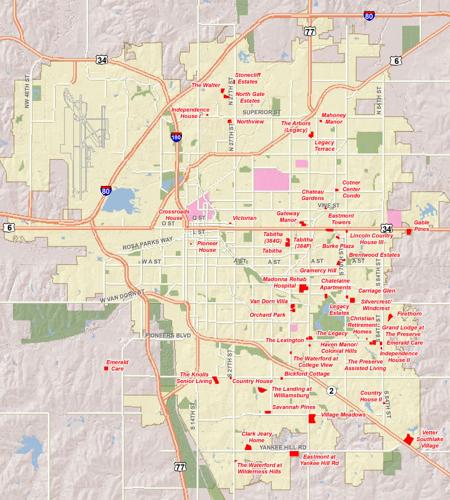
Nearly 1,000 new housing units designated for senior citizens will be built in Lincoln over the next few years.
Among them are four major complexes -- coined “life care communities” -- designed to meet the changing needs of an aging population.
It’s a senior housing boom.
But is it more than the market can handle?
At least one developer thought so, and late last year withdrew plans for a $20 million independent and assisted living facility in the Haymarket, saying Lincoln’s senior housing market was “overbuilt.”
Pat Day, the developer for the new Knolls Senior Living Community, disagrees.
“We feel bullish about Lincoln’s senior living industry,” said Day, president of Dial Senior Properties.
People are also reading…
And with good reason.
U.S. Census projections show Lincoln’s senior population is on a strong upward trajectory. Senior citizens are among the city’s fastest growing demographic -- and demand for senior housing, which already falls short of supply, is only going to increase over the next 25 years, said Brandon Garrett, a city planner.
Between 1980 and 2010, Lincoln added more than 40,000 new housing units and 16 percent of that growth was in the 65-plus age group, Garrett said.
But in the next 25 years, that growth pattern shifts. Using U.S. Census estimates, Lincoln will add 52,000 housing units between 2010 to 2040, and 53 percent will be for seniors 65 and older, Garrett said.
In 2005, Lancaster County had 22,709 residents between the age of 65 to 84, and another 3,532 age 85 and older.
In 2015 that number grew to 31,843 people age 65 to 84 and another 6,300 age 85 and older.
By the year 2040, census projections expect senior numbers to nearly double to 75,196 senior citizens -- 58,329 of them between 65 and 84, and 16,867 age 85 and older.
“A good percentage of those people (age 65-84) will age in place,” Garrett said, meaning they will continue to live in their long-time homes.
“But if 20 percent need specialized housing, that is 11,665 people on top of the projected 16,867 seniors 85 and older expected to live in Lancaster County in 2040.
“That’s four times the number we have today,” Garrett said. “No matter how you add it up, just by the nature of our needs we see a demand (for more housing).
“It’s a nationwide issue: How do we properly house the people in that age group?”
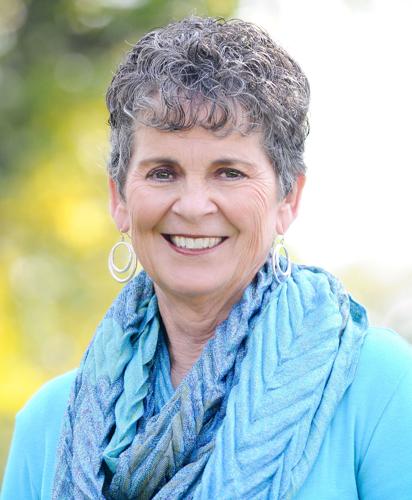
It’s an issue Mary Ann Stallings deals with all day every day. Stallings is the founder of Bridge to Better Living, a consulting business that helps families find the housing that best fits the needs and desires of senior members.
Stallings is also president of Seniors Foundation, a nonprofit organization that provides financial support for senior centers in Lincoln and Lancaster County. The foundation is working to redevelop Lincoln’s Veterans Affairs campus into Victory Park, a housing complex for veterans and seniors.
“When you see 50 percent growth projected in the next 25 years … Yes, we will need more (senior) communities.”
What those communities will look like remains to be seen.
Waiting lists not uncommon
Although the needs of seniors vary widely, demand for housing exceeds the current supply in virtually every category: independent living, assisted living, memory care and skilled care, Stallings said.
Those choosing to move into an independent living/retirement community often must get on a wait list.
“It’s not uncommon to wait one year or more,” Stallings said.
She noted that several clients have been on wait lists for four years, willing to wait until the community of choice has an opening.
More frequently, Stallings’ clients need to move as soon as possible -- usually to a facility offering some level of assisted living or memory care. But Lincoln’s assisted-living facilities are almost always full, Stallings said.
And assisted-living services vary by facility.
“I say if you have seen one assisted-living facility -- you have seen one assisted-living facility,” Stallings said.
By Nebraska law, assisted-living communities must provide three meals a day, have a nursing coordinator available 24/7 and provide assistance with “activities of daily living.” Those activities can vary from helping people get dressed to dispensing medication and caring for those who are incontinent. Some places offer an “assisted plus” option, meaning the level of assistance can increase with the need.
Unfortunately, most people don’t plan ahead or foresee their need for assisted living until they need it -- meaning they usually have to take the first available spot, regardless of it the facility's services perfectly match their needs, Stallings said.
Some of the biggest growth is in memory care facilities -- a need that continues to increase as more people are diagnosed with Alzheimer’s disease and other dementias.
By their very nature, memory care facilities are smaller, often housing 12 to 18 residents per wing. In recent years both Country House and Emerald Communities’ Independence Houses have opened new facilities.
Lincoln’s Country House III, a 39-bed facility under construction at 70th and O streets, is slated to open in the spring.
Emerald Communities has four Independence Houses, with its original building at 1740 Superior St. undergoing a complete renovation.
Newest trend is life care communities
The newest trend in senior housing is to offer all the housing options in one senior community.
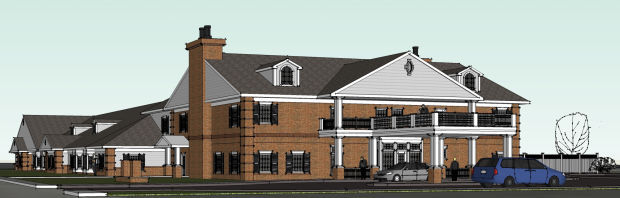
That's the plan for the new Eastmont at Yankee Hill complex slated for 52nd Street and Yankee Hill Road; the Knolls Senior Living; and a proposed senior community, formerly called Gable Pines, to be built near Hillcrest Country Club at 95th and O streets.
They are being called “life care communities,” said Carol Ernst, Eastmont executive director. It’s more than a name change from “retirement” community, it’s a new philosophy built to meet the needs and wants of aging baby boomers.
Eastmont at Yankee Hill will be “geared to the very choices future consumers are going to demand,” Ernst said. “We will be tailoring our services and programs to the individual, versus trying to have them (individuals) fit into what is being offered.”
Life care communities are designed for very active and healthy lifestyles, versus “the sedentary, we’re-retired-now lifestyle,” Ernst said.
“It’s a different way of looking at health and wellness activities,” she said.
It also incorporates a broader philosophy that seniors can receive the care they need for the remainder of their lives.
“Transition is difficult. Whether it is from preschool to kindergarten, middle school to high school or high school to college ... for seniors moving from their home, this is one of the last transitions. They want to make sure that when they do it, this is where they will end up,” Stallings said.
Life-care communities are designed to be seniors’ final move -- that even as their physical, mental and health care needs change, the community can accommodate them, said Dial’s Pat Day.
With independent- and assisted-living units, as well as a memory care facility, these new complexes allow husbands and wives, brothers and sisters and lifelong friends to continue living in the same community, no matter how the care needs change.
More than physical needs
When talking about senior housing, the focus is often on people’s physical needs. But emotional and social needs are just as important -- if not more, Stallings said.
As people age, they often become homebodies, decreasing activities because they aren’t comfortable driving at night or don’t feel as sure-footed as they once did. That can quickly slip into self-imposed isolation, Stallings said.
“Seniors who stay home by themselves tend to go into depression,” she said.
“One of the first things to go is nutrition -- and poor nutrition only exacerbates the depression."
Senior housing doesn’t just cater to physical needs of fewer stairs, wider hallways and safer bathrooms, it provides connections to people, activities and conversation.
And memory care facilities make socializing non-negotiable, Stallings said. For good reason, studies have found a strong link between active friendships and brain/memory health.
Senior housing can also alleviate stress on adult children, who may take on the cooking, housekeeping and shopping roles for their aging parents. If the life care community provides those services to residents, sons and daughters can better enjoy their time with senior parents, Stallings said.
While no one has a crystal ball to determine what senior housing will look like 10 or even 25 years down the road, one thing is certain: Lincoln will need more.
“There is going to be a strong demand for it, and we need to figure out where all these people are going to live,” Garrett said.
Stallings agreed.
“Over the next 15 to 20 years it will be interesting to see the concept of retirement communities and how they work for baby boomers,” she said.
“... Baby boomers are a different breed.”


