


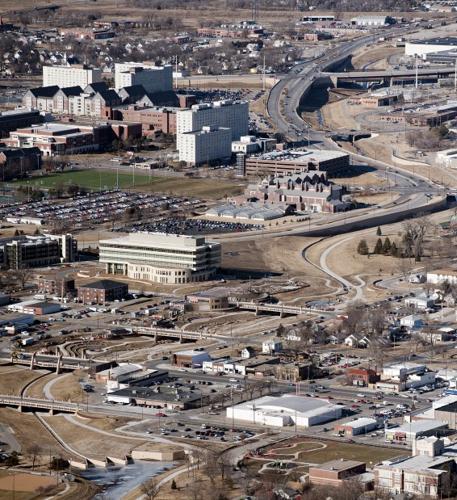
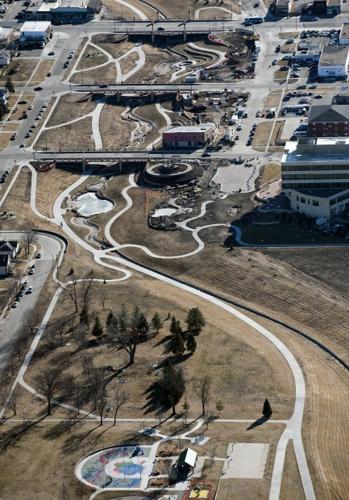
The biggest civic improvement project in Lincoln's history is nearly complete.
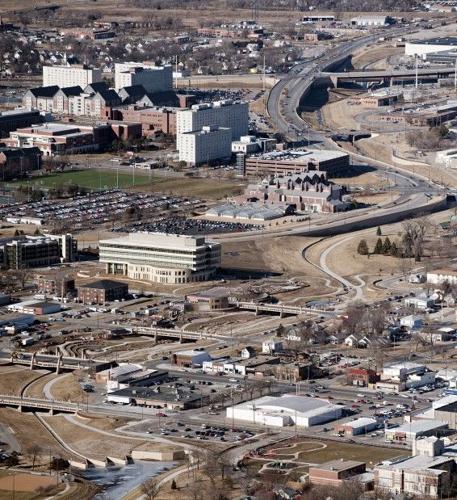
Finish up bridge work on South Street, reconstruct a stretch of O Street, complete a trail center, add some sculptures and plant some vegetation and Lincoln can put a bow on the Antelope Valley project. Wynn Hjermstad, of the city's Urban Development Department, estimates the project is 95 percent completed.
It has been a 12-year process that has changed the landscape of a large area of the city, mostly northeast of downtown, including relocation of a number of residents and several businesses.
Looking back, Lincolnites may find it hard to remember what the affected area -- from about Vine Street to J Street, 18th Street to 22nd Street -- looked like before.
The $246 million project, organized by the city of Lincoln, the University of Nebraska-Lincoln and the Lower Platte South Natural Resources District, aimed to substantially reduce the floodplain along Antelope Creek, improve the streets network near UNL and revitalize blighted neighborhoods east of City Campus.
People are also reading…
Through construction of an open channel from Salt Creek Roadway to J Street -- where the stream had flowed through an underground conduit -- and other improvements, the project shrank the official floodplain from a width of about 1,700 feet to less than 200 feet, taking about 700 structures out of the floodplain, increasing property values and eliminating the need for expensive flood insurance.
It created the new multi-lane Antelope Valley Parkway, an efficient north-south roadway, said Hjermstad.
It improved and expanded Trago Park, created a pedestrian and bike trail that linked six existing trails with the three-block Union Plaza Park, still under construction. The area will provide new recreational opportunities near downtown Lincoln.
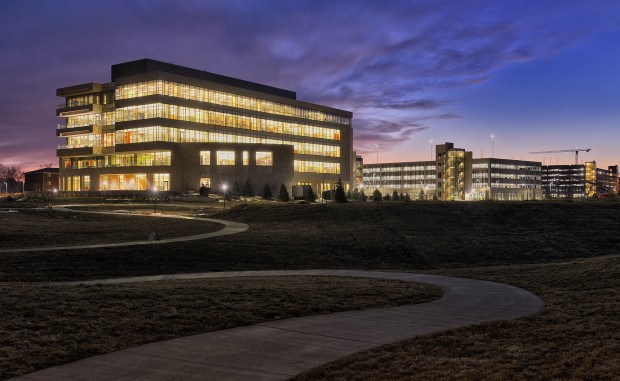
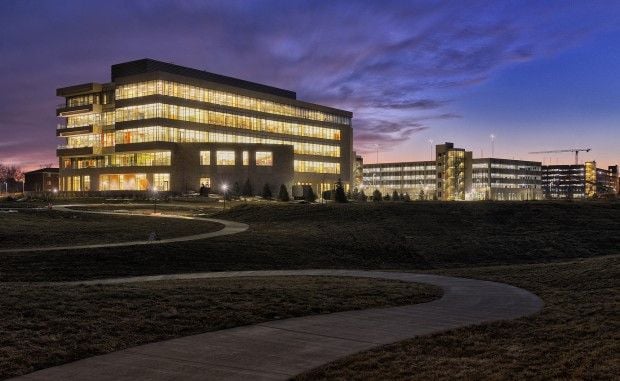
It created new public-private investments, such as the Assurity Life Insurance Co. headquarters near 18th and Q streets; Turbine Flats, a cooperative building for computer programmers; and new affordable housing, like Liberty Village and Creekside Village. Antelope Creek Village, another housing project, is under construction.
City officials are pleased with the project, the final costs for which came in 11 percent below initial estimates.
But more than a decade of planning and construction also created collateral damage.
It displaced hundreds of residents, and more than 500 jobs and 44 businesses were relocated from the area, according to a July 2000 Journal Star story.
The city now says the number of relocated businesses was more like 25.
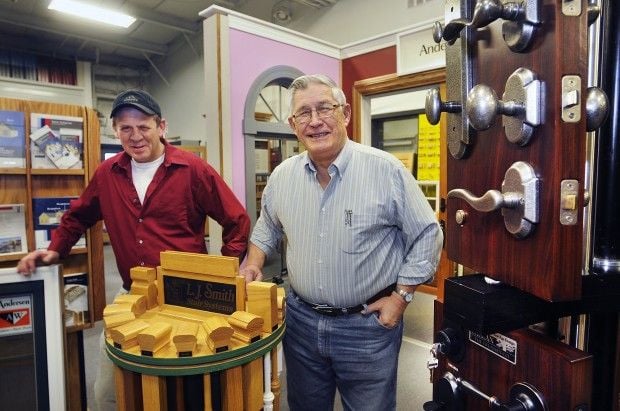
Businesses that had been in the affected area for generations, like the 43-year-old auto body shop and a lumber yard more than 50 years old, had to move.
The city paid a collective $12.6 million to residents and businesses for their land.
The move didn't work out well for everyone.
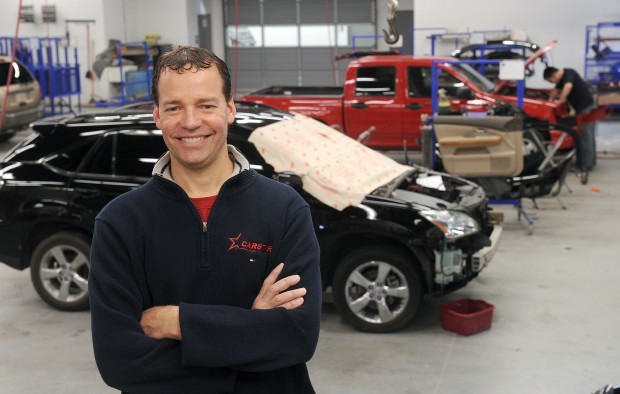
Glenn's CARSTAR Body Shop had to close its doors for a year and a half and lay off six employees during a transition period from the old building to the new at 21st and K streets.
"The amount of expenses the City of Lincoln wouldn't reimburse was monumental," says Glenn's CARSTAR manager Allan Hillhouse. "For starters, there was a year and a half's pay for myself and my staff that was non-recoverable.
"I still had a house payment to make."
They moved five blocks south from 2121 P St.
They wanted to stay near downtown to retain clientele. It was their primary request of the city, but it also brought a lengthy and cumbersome process of trying to rezone their current land, he said.
"In the end, our past customers and the city council supported Glenn's and paved the way for us to build our facility and return to serving our customers," he said. "We're all resistant to change,"
"But we knew that the Antelope Valley Project would be a very real benefit to this part of Lincoln, so from that aspect, we embraced the project.
Still, he said the process was difficult for both the City of Lincoln and for the private business owners.
His father, Glenn Hillhouse, also had a significant investment in condemned houses he had brought back to life. The city bought up more than a dozen of them.
But many who were upset about the development when it was beginning in 2000 have seen the positives with the benefit of hindsight.
Gary Blattert, president of Earl Carter Lumber, said in 2000, "They (the city) don't take any input. It's cut and dried. What they want they are going to do."
But 12 years later, Blattert says the move was the "best thing that's ever happened to us."
Blattert's business moved from the heart of the project, at 19th and R streets, to 1235 W. O St. in 2008. The move gave the business more room to grow, a growing customer base and the ability to offer more services.
"Times change," he said, "and for us, it was a better move to a better location."
For Earl Carter Lumber, the economy, not the move, affected their business.
"The housing business has been low for the past five years," Blattert said. "But it's starting to pick up more. Our customers have continued to find us at the new location and we've even had some folks from west Lincoln start coming to us."
Blattert now praises the redevelopment of Antelope Valley. He said the area has grown up and looks more beautiful than it ever could have before the project.
Now in 2012, Lincolnites have seen the transformation and new growth.
The lumber company's former neighbor, Matt Talbot Kitchen and Outreach, moved north to an old Carnegie Library on North 27th Street.
The kitchen's footprint made way in part for the new 175,000-square-foot Assurity Life Insurance headquarters, a huge anchor in the development, which employs about 400 people.
Assurity CEO Tom Henning said the location is going to provide plenty of benefits for his employees. The building is right off the trails, so employees can bike or walk to work, and the basement has showers and locker rooms to help accommodate that.
"Our board was very forward-looking when we were approached about coming to Antelope Valley," Henning said. "We're excited to be among the first to anchor this great project."
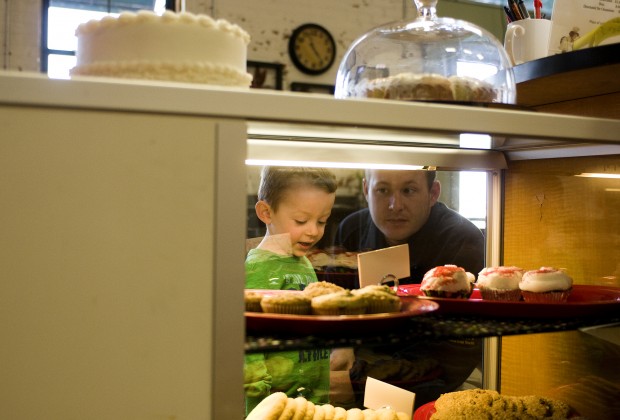
It also brought smaller shops, too, like Mama's Dream Bakery and Monkey Wrench bike shop at 19th and Q streets.
"Had there not been an Antelope Valley project, we wouldn't probably have ever looked here," said Monkey Wrench owner Nate Woodman.
The only original building left in the area used to be an antique shop, but now it's a place for muffins and bike tires.
Joe Mara, who owns the building, encouraged Woodman to move to the building multiple times. Woodman didn't want to until he heard about the Antelope Valley development.
He said a bike shop could be an asset to the area with a trail two blocks away. And it has, Woodman says.
"Knowing they were developing the area so much made it more attractive," he said. "We see quite a lot of traffic ... and I can only assume it will get better as it nears completion."
Denise Schrader, co-owner of Mama's Bakery, used to peruse the antiques at the building in the past. When she saw a for-rent sign in the window, she called, pitching her idea of a bakery.
She and her partners looked at spaces at 48th and R streets and on Sun Valley Boulevard before deciding on Antelope Valley.
She said they needed a space that was big enough for the bakery, had enough parking and a location where they could be seen.
They found that in Antelope Valley, she said.
"We knew it'd be a tough first year with construction," she said. "We've had people call and tell us they don't know how to get in to our store, but we were lucky they wanted to come enough and found a way."
"The location is going to pay off."
 Click here to see a sliding map that demonstrates the area's changes.
Reach Journal Star reporter Jordan Pascale at 402-473-7120, jpascale@journalstar.com or follow him @LJSPascale.


