
Ever dream of shooting 300 mph in the Speedway Streamliner on the Bonneville Salt Flats, cruising behind the wheel of a 1930 Duesenberg Model J worth more than $1 million or rebuilding the Ford Model T that you found in a farmer's garage?
Those dreams become more than a fuzzy, sleepy vision at Speedway Motors.
The world-renowned collection of cars, publications, engines, engine parts and all the features that go into Speedway Motors and the Museum of American Speed are true treasures of Lincoln on West O Street.
Bill Smith borrowed $300 from his wife, Joyce, in 1952 to start Speedway Motors — selling racing parts for hot rods, Indy cars and everything else that needed a little rumble and roar.
Through growing pains — from 17th and O streets, eventually to the giant West O campus — the Smith family business has grown, adapted and grown more. Today, the business employs 400 people.
People are also reading…
Still, the Smiths stay faithful to the history of their business with the Museum of American Speed.
The museum, a nonprofit appendage of Speedway Motors, has three floors of cars — Indy cars, fancy cars, dragsters and dirt-track racers — and hundreds of car toys to go with a couple of fully replicated racing garages.
"The display is changing by the hour, it seems," said Tim Matthews, curator of the 150,000-square-foot, 22-year-old museum. "I have a new favorite every day. One day, it's the Duesenberg; another, it's a 1940 Ford that a Lincoln man built in a garage behind the Joyo Theatre and forgot about."
Matthews said Bill Smith's love of anything auto-related helped build the museum and promote its growth as a national attraction.
One of the most recent acquisitions is a 1957 Thunderbird that was modified to become the first "street car" to eclipse 200 mph.
The museum may be the showcase, but the business hums along in a nearby 500,000-square-foot building.

Jeff Behrens (right) helps a customer at Speedway Motors, the Lincoln company that sells parts to customers around the world.
From the very popular wiring harness, used to make a rebuild easier, to a custom kit for a '32 roadster, Speedway supplies all the dreams of speedsters, hot rodders and racers around the world.
"We've worked hard to keep up with the trends in e-commerce," said Ryan Ebke, the director of products and technology for Speedway Motors. "We still have the catalog, and we still focus on the passionate customer. But with the advent of Amazon and the like, we've jumped into the newer markets and marketing."
Part of that growth is the expansion of the business to include a store and warehouse in Phoenix.
Aaron Remaklus, a longtime employee, is in charge of Speedway West operations in Arizona, with the aim of putting the vast array of parts and expertise that Speedway Motors offers a bit closer to a large population of speed-seekers.
The expansion will allow Speedway to get parts to customers in Southern California within a day and to other locations on the West Coast in two days.
Consider the change from the days of Bill and Joyce Smith putting parts on Greyhound and Continental Trailways buses out of Lincoln.
The Phoenix expansion will offer a bit of the museum, too — one or a couple of cars at a time on display in the retail store in Phoenix set to open this spring.
Shocks, springs, performance headers, custom valve covers, radiators and other parts have become the backbone of the business that started with "Speedy" Bill Smith building his own racers.
Smith provided the horsepower and the racing wherewithal for NASCAR heroes such as Tiny Lund, open-wheel favorites such as Jan Opperman and Doug Wolfgang and dozens of others driving the cars carrying the famous No. 4X.

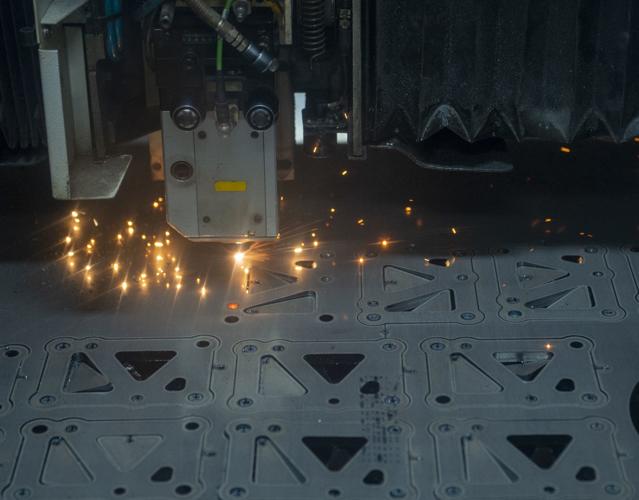
A machine cuts out plates that are then hand-finished and sold as parts at Speedway Motors.
Today, the family business run by sons Carson, Craig, Clay and Jason is always on the lookout for better ways to serve its customers.
"As we've gotten away from the very mechanically inclined racers and builders, we've adapted to the modern-day consumers," Ebke said. "Heck, we even had a guy who needed special parts for his rebuild of a World War II Sherman tank, and we took care of him.
"I'm glad he doesn't live in my neighborhood."
Those customers who shop in Lincoln often stop by the museum.
"You can see the inspiration in their eyes as they look at what people did in the past to build their dream cars," Matthews said. "And we keep in mind that the Smiths wanted to share their love of cars and racing through the displays in the museum.
"It all fits together pretty well."
Photos: A day inside Speedway Motors
Progress Speedway Motors, 2.3

A completed project car is on display at Speedway Motors.
Progress Speedway Motors, 2.3
Jeff Behrens (right) helps a customer at Speedway Motors, the Lincoln company that sells parts to customers around the world.
Progress Speedway Motors, 2.3

Jackson Urbom measures a package at Speedway Motors.
Progress Speedway Motors, 2.3

Vintage Indy cars are displayed at the Museum of American Speed.
Progress Speedway Motors, 2.3
A machine cuts out plates that are then hand-finished and sold as parts at Speedway Motors.
Progress Speedway Motors, 2.3
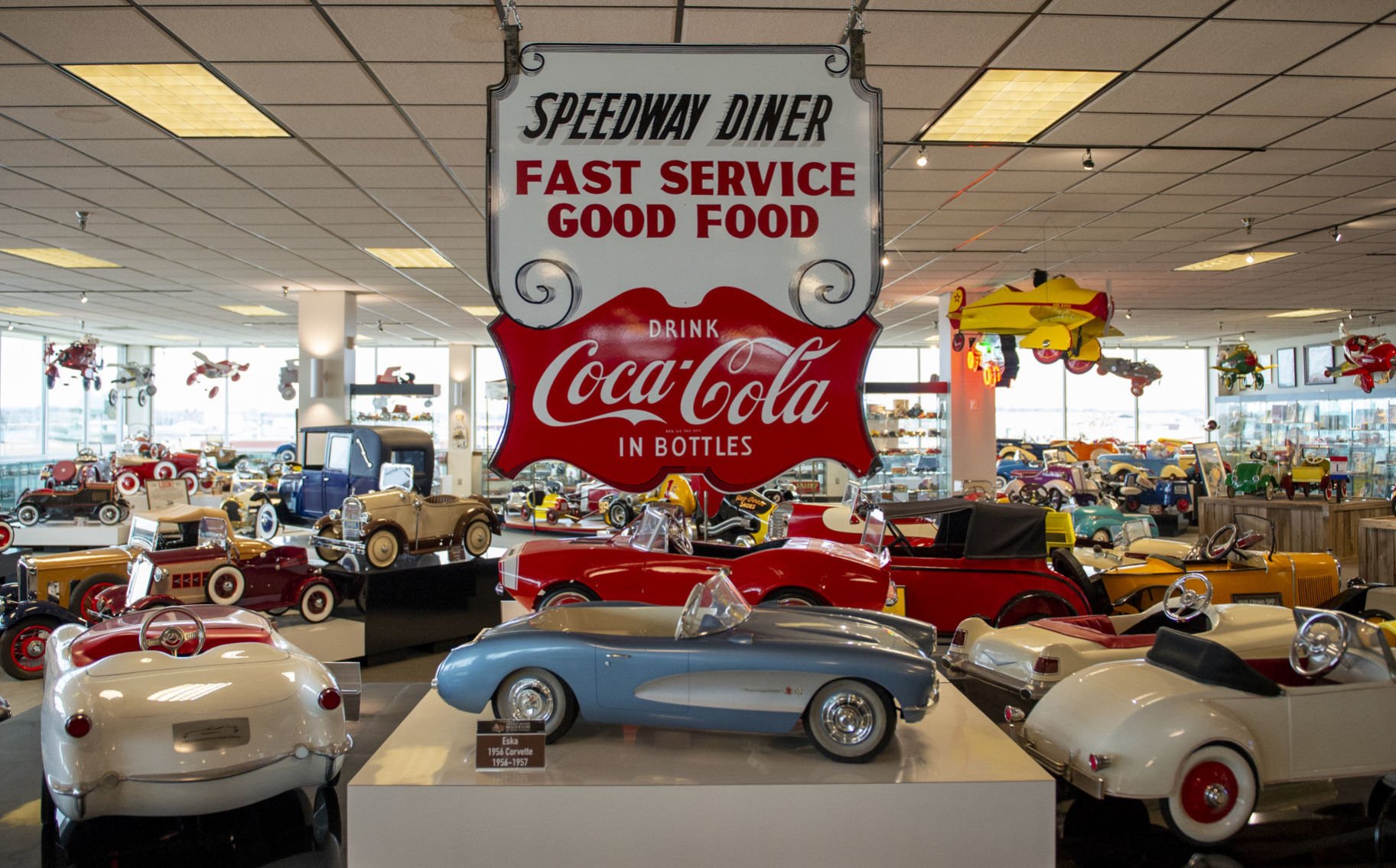
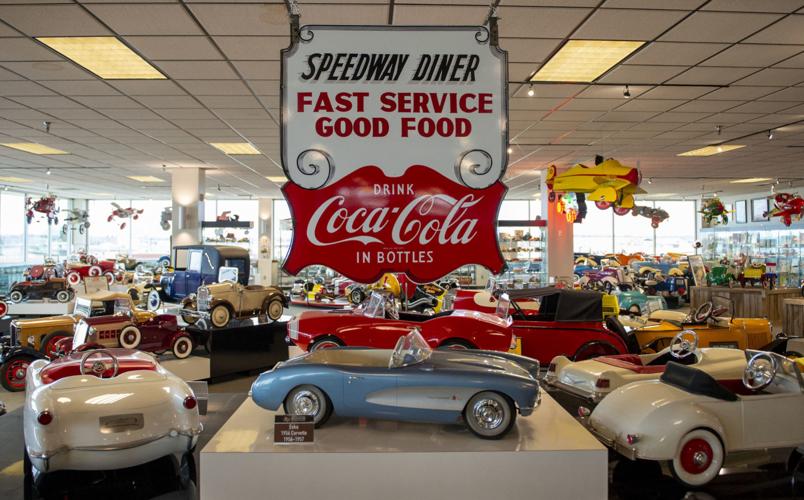
The Museum of American Speed features an expansive collection of pedal cars. The three-story museum has grown into a national attraction for hot rodders and speed enthusiasts.
Progress Speedway Motors, 2.3

The warehouse at Speedway Motors in Lincoln.
Progress Speedway Motors, 2.3

The Museum of American Speed has three floors of cars -- Indy cars, fancy cars, dragsters and dirt-track racers -- and hundreds of car toys to go with a couple of fully replicated racing garages.
Progress Speedway Motors, 2.3

Emily Weers talks with a customer in the call center at Speedway Motors.
Progress Speedway Motors, 2.3

Speedway Motors is adding a store and shipping operation in Phoenix to get parts to West Coast customers within two days.
Progress Speedway Motors, 2.3

A welder works on a part at Speedway Motors.