


In 2006, the University of Nebraska-Lincoln started a program for certain high school students to prepare for college. If they met strict academic guidelines, the students would receive full scholarships to UNL. The program began with a few staff members and a goal: allow students who otherwise might not attend college to pursue their goals of attaining degrees.
In two weeks, members of the first class of the Nebraska College Preparatory Academy will enter their sophomore year at UNL. The program has grown to a full staff and 300 students, but not without challenges.
Abel Covarrubias wasn't thinking about college when he was a freshman at Grand Island Senior High School in 2006.
He was focused on being a teenager instead of meeting the criteria of the Nebraska College Preparatory Academy, to which his teachers nominated him in the eighth grade.
People are also reading…
But his sophomore year in high school, something clicked.
"I realized the opportunity I had been given," Covarrubias said.
The first in her family to attend college, Covarrubias now is entering his second year at the University of Nebraska-Lincoln, thanks in part to the prep program.
The academy offers mentoring services and, ultimately, full scholarships to low-income and first-generation high school students who meet strict academic criteria. The program works with students in Grand Island and Omaha North Magnet High School, guiding them from their freshman year of high school through their senior year of college.
The academy's first class completed its freshman year at UNL last semester, and program coordinators say they learned a lot, including how to better prepare the students in high school and how to better support them once they are on campus.
Most of all, Director Amber Hunter said, they've learned about the resilience of students who want to achieve their dreams.
* * *
The academy is very different than it was in 2006, Hunter said. Then, it only worked with students in Grand Island.
"We had no real expectations, but we knew we had a good group of students," Hunter said.
By the time the Grand Island students were juniors, the program had received grants and saw areas it needed to address better, Hunter said, so it expanded to include 11 juniors from Omaha North.
"We immediately saw it as a great opportunity for students," Omaha North curriculum specialist Dan Sitzman said.
Thirty-three students from the two high schools enrolled in the program last fall. The academy implemented the Institute of Excellence, a retention program based in the new Jackie Gaughn Multicultural Center.
When the students got to UNL, they enrolled in a study skills class and met at least once a week with staff members. Every step of the way, someone from the academy was there to help, Covarrubias said.
"It was incredible. I loved it. I felt prepared and had my study skills down my first semester and developed those skills more my second semester. They offered a bunch of different study environments and built me a connection."
Still, Hunter said, some students struggled to maintain the required 2.5 grade-point average and with other academic and social obstacles. From the first college class, 52 percent met the criteria to get their scholarships for a second year, and 88 percent are returning to UNL.
"Their situations can sometimes be very difficult," she said. "We try to provide the right support so they can move forward."
When he was struggling with a philosophy class, Covarrubias said, he asked retention coordinator Jeff Hall who to go to for help.
"I was doing terrible in that class," Covarrubias said. "He ended up saying he could help me. We looked over my book, going through everything I didn't understand. And I ended up doing well in the class."
The staff is evaluating the first year its students spent in college to determine how to improve in the coming years. They hope to increase scholarship retention numbers. But Hunter said the program still was beneficial to students, even if they didn't meet all of the criteria.
"We opened their eyes up to knowing what having a degree means."
* * *
The program now has 300 students enrolled from its two schools. The students apply in the eighth grade and are selected through a competitive process. They have to complete a research project their senior years of high school.
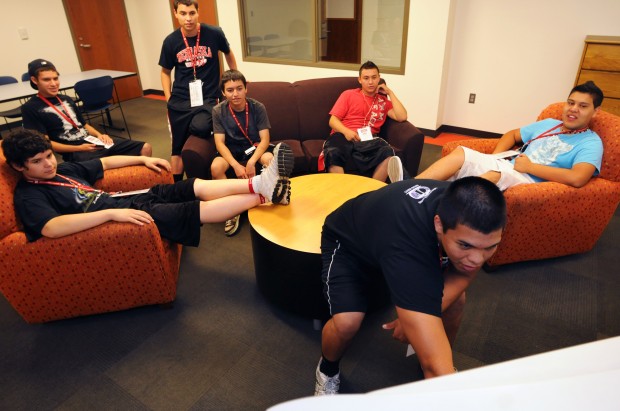
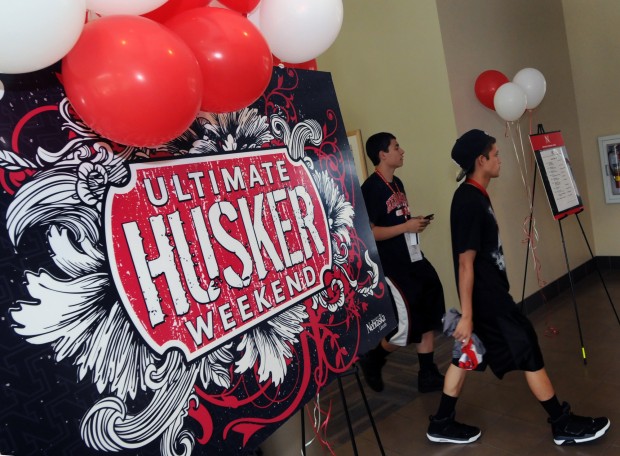
And the academy is working more with the high schools to strengthen students' academic preparation. It brings students to Lincoln to help them better navigate the campus when they arrive in the fall.
"When they get here, it feels like home," Hunter said.
The staff's work has made a tremendous difference at Omaha North, Sitzman said. Coordinators have worked to identify the differences between Grand Island and Omaha North and how to deal with each high school accordingly.
"They don't just say, 'We'll pay for your education,'" Sitzman said. "They are the ones providing support. They have really adapted well over the years."
Because of the program, Sitzman said, students see high school graduation as a starting point, rather than as an ending.
Hunter's goal is to see the first college class, and classes after that, go through four years of the high school program and then on to college.
"My main hope is to graduate some students to move on and be good citizens of this state," Hunter said.
Covarrubias plans to stay in the program and get a degree in business administration.
"It was pretty amazing to start from high school," he said. "People may have had their doubts, but we are actually succeeding."
Two weeks before he moves into Abel Hall, he already has his bags packed.


