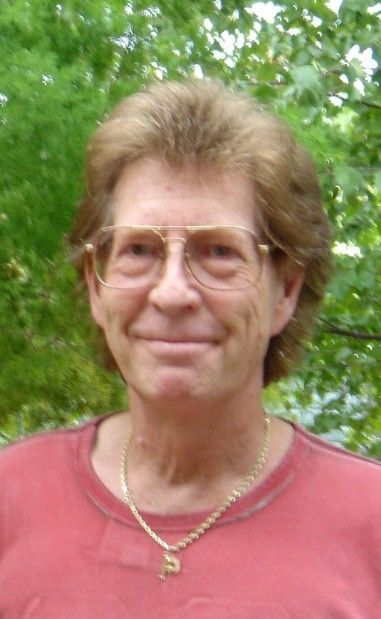

Dave Trupp was done selling cars.
He was sick of the haggling, fed up with customers and their fruitless efforts at negotiating $100 off of $125,000 price tags.
Years and years of working as everything from waiter to head shop clerk to bartender had taken their toll. Trupp's passion didn't lie in dead-end jobs, and as he'd say, he sure as hell wasn't going to find it in being an auto salesman.
Fighting with people for a living, he said, quickly was becoming unbearable.
"One day I just walked in and I knew I was going to quit," he said. "I just got tired of it and packed it up.
"I never wanted to see anybody for the rest of my life."
* * *
People are also reading…
He was a drummer after all -- started playing right out of high school, and for a few decades, he never stopped.
He never formally was taught how to play, never joined the drum line and "didn't give a s#*$ about the girls" like the others did. He just wanted to drum, he said, and he thought he had the chops.
Local bands thought so, too.
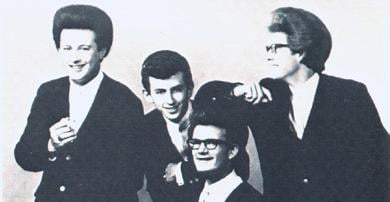
The Eccentrics, a well-known Lincoln-based band would hire Trupp in 1963, after his longtime friend, bassist Mark Dalton introduced him. It was with The Eccentrics that Trupp would meet Denny Zager, Rick Evans and the air of promise that would take his drumming career to new heights.
Five years later, at a concrete block three-track recording studio in a remote field in Odessa, Texas, Dave Trupp, a small-town drummer from Nebraska, was raising a smash hit that would change the world.
Trupp, Dalton, Zager and Evans had been sent to Odessa by a Lincoln bar owner who told them, "Look boys, I'm going to give you the money to go record that song because everybody loves it, and I think it's going to be a hit," Dalton said in a later interview with Lincoln radio station KTGL-FM.
The boys returned home with a record that dazzled Lincolnites like none before.
"We had like 5,000 copies made, and we came back and sold them out of the trunk of a car," Trupp said. "They sold in about a week, and so we had more made. A bunch of record people got interested in it and flew in."
Zager and Evans' "In the Year 2525 (Exordium & Terminus)" eventually would sell millions of copies, topping the charts for six weeks in the summer of '69, just as 500,000 impassioned Woodstock-goers were piling into their cars for a long drive home.
The ballad, written by Rick Evans and based on Aldous Huxley's "Brave New World," told of a future doomed by humankind's dependence on technology -- a Randian dystopia where, in one instance, people's actions, words and thoughts are preprogrammed into a daily pill.
Ominous orchestrals accompany the journey.
But at a high point in Dave Trupp's drumming career, the holdings of a distant future would end up being the least of his concerns.
* * *
"It was a mess before me and Mark got a hold of it."
After the commercial success set in, Trupp never did perform "In the Year 2525" with Zager and Evans -- not for a live audience at least.
It was planned that way. "The band" had gotten together for the sole purpose of recording the track, and the members, friends from early on, would go their separate ways after the initial smoke cooled.
But as a vital component of the hit record, Trupp thought he deserved a cut of the earnings, a token of Zager and Evans' appreciation at the very least.
And so, when Trupp later petitioned Evans for more than just a scale-rate payout -- a couple thousand dollars -- from the song, he was met with unfettered disappointment.
Evans had written the track, Trupp said, so Evans was rightfully entitled to the payout.
"That's how it works," he said. "The writer gets all the money unless he's got somebody screwin' him out of it. I just thought he would treat us a little bit more fairly."
Suddenly, it seemed like a friend had turned on him. Dalton, he said, felt the same way.
"We just thought Evans would take care of us a little bit better, he said. "Write us a check every four months. It's a lot of money."
* * *
By 1973, it was over.
Trupp had given drumming one more shot after Zager and Evans, forming his own band, "Cotton," in Fort Collins, Colo. They broke up in Lincoln.
"One of the guys' chicks, she wanted to run the band," he said. "Nobody wanted any part of that, especially me."
It was a hard life, he said, bouncing around from band to band, looking to make a living on checks that were all but guaranteed.
"You get tired of it," he said.
And so, then came the jobs. They're all a blur for him, well, except the bartending gig -- he liked that one.
Busing tables, selling vinyl records, telemarketing and those dreaded years at the car dealership -- the ones that ended in the fiery scene that led to his retirement.
Trupp still lives in Lincoln, now with his wife, Judy. In retirement, he spends time with his son, Emerson, who manages Dish, a downtown Lincoln restaurant.
He doesn't play anymore, but he said he misses it from time to time.
He took his last stab at drumming a few years ago, when he took his first formal lessons.
"I just wanted to learn the correct way," he said. "To do it correctly, you have to start it when you're like 4 or 5 years old. You wonder why there are so many good musicians? ... They've all got chops, and they've been doing it since they were 5 or 6 years old."
And while the one-hit-wonder of Zager and Evans might be a distant memory, his one-time friend is far from forgotten.
"We used to talk all the time, and then all of a sudden about five or six years ago, I can't get ahold of him," he said. "Rick doesn't return the calls.
"He just doesn't stay in touch with anybody. I don't think he's as appreciative as he should be. Like calling and saying, 'Hello, how are ya? Thanks for makin' me $10 million. I just wanted to see if you were alive, ya' know.'"
An avid Internet user, Trupp makes an effort to stay in touch with Dalton, who lives in Seattle now.
As for the hit record he played on, Trupp said, it's hard to escape it completely. Every now and then, parodies bring it back to significance. Plus, he said people in Nebraska recognize him from time to time.
"I'll get that once in a while: ‘Did you play on that record?' he said with a laugh.
For Trupp, though, memories of "In the Year 2525" are all but played out.