




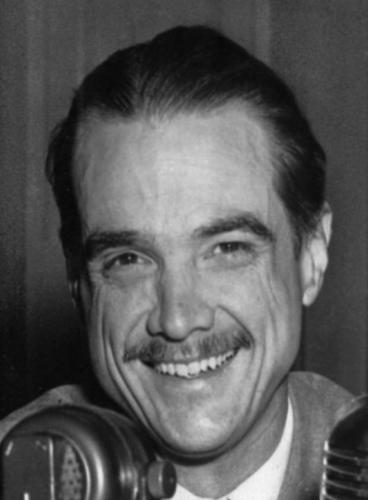

One thing, maybe only one thing, is certain about Howard Hughes. Haul his name into a discussion, an online posting, a newspaper story, wherever, and things get peculiar.
You see blogs about people testing other people's DNA to see if it matches, or doesn't match, someone who might or might not have been the real HH.
A caller who sounds OK won't identify himself because he's in the midst of research, and you might not be who you say you are. Intelligence agents are keeping an eye on this story, the caller says.
You begin to wonder if Hughes and his legend might be connected in some astro-metaphysical way to the Bigfoot striding through so much cable TV time these days.
Mark Musick and Doug Wellman, meanwhile, have told their story -- or rather Eva and Howard's story -- and they're sticking to it.
People are also reading…
Published two years ago, "Boxes: The Secret Life of Howard Hughes," was written by Wellman, assistant dean of the School of Cinematic Arts at the University of Southern California. It is based on research done by Musick, the former commander of the Nebraska Air Guard.
The book says eight years before his reported death in 1976, Hughes substituted a Las Vegas derelict for himself and escaped his identity, but continued to operate his business affairs until his stand-in died and his family overturned his famous will in court.
It says Hughes spent his exile in the Panama Canal Zone, the Florida Panhandle, Arizona and Alabama in the privacy he craved. He assumed the identity of aircraft maintenance supervisor Verner "Nik" Nicely, the name of a real person who conveniently disappeared while working with or for the CIA in Panama.
The real Hughes died in 2001, at age 96, according to the book.
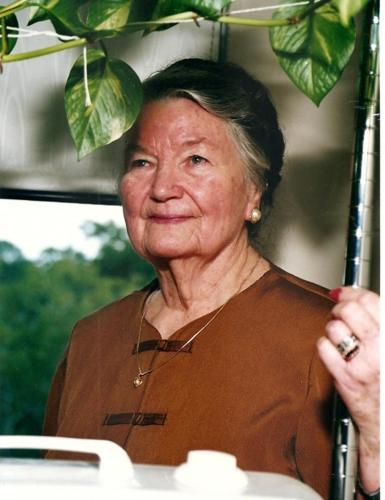
Hughes had lost access to his fortune but won the heart of Eva McLelland, married her and stayed married 31 years until his death, the book says.
She told her story to Musick and died in 2009.
The book came out and an uproar ensued, at least among those interested in the reclusive, eccentric Hughes, a fabulously wealthy pioneer of aviation. The Hughes pot stirs itself, but the book certainly helped.
Paul Winn, 81, worked for Hughes for years. Trained as a court reporter, he served in the Korean War's armistice talks and later was a corporate secretary to Hughes and his business organization. He has two law degrees from the University of Southern California.
He thinks Musick and Wellman are nuts, or mercenary, or both.
"There's lots of wild stuff that's true," Winn said. "We don't need to go making it up."
Angry and annoyed after the book's publication, he talked to both Musick and Wellman. Musick says he screamed.
"If the name Howard Hughes is attached to something, it suddenly becomes worth a lot more," Winn said in a recent telephone interview.
That's why people are wondering on the Web if they might be Hughes' illegitimate offspring, he explained.
"I don't know why anyone is pursuing this, even if you were Howard Hughes' offspring, there's nothing to get," Winn said.
The estate was settled long ago.
Aside from the book, Winn complains he has been tied in specious Internet posts to the CIA. His son, a corporate executive, is being besmirched, as is his faith, the Church of Jesus Christ of Latter-day Saints.
"It's insane," he said.
One blogger published his address, phone number and directions to his home. The tenor of that Web poster's message was: If he dies, go talk to Paul Winn.
He doesn't know where to begin on "Boxes."
"I wouldn't buy the damn thing," he said. "(Musick) sent me a copy.
"The whole thing is just so wild." Winn said. "When Hughes died, the FBI had his fingerprints, and it was the body of Hughes.
"We had someone with him at all times. There wasn't a period of five minutes there wasn't someone there, an inside guy and an outside guy."
Winn said he worked for Hughes's organization from 1957 on and was with him almost constantly the year of 1961.
"So, I knew the guy really well," he said.
In the early '70s, Winn became executive assistant to Bill Gay, head of Summa Corp., now the Howard Hughes Corp., a real estate development company.
Winn said he was in on the arrangements when Hughes left the Bahamas, when he was in Nicaragua, when he went to Vancouver, and when Hughes moved to London.
"I saw the guy in Vancouver," Winn said. "It wasn't some drunk off the street."
Christmas Day in 1972, Winn says he spent getting Hughes and others out of Nicaragua to Florida after the historic earthquake.
"I recall they stayed overnight and then flew to London to the Inn on the Park. We were over there a lot of times. I saw the guy. So where do these people (reported in the book) come from who rented space and traveled back and forth?"
When Hughes died, Deloitte and Touche went through the books and found "a lot of stuff," Winn said. Hughes's trusted executives were ousted and sued for mismanagement, under the direction of a Hughes cousin who was administrator of the estate.
"I mean, there was an audit like you would not believe," Winn said. "Lawyers and accountants going through everything. They moved me up to Las Vegas in the summer of 1976. I became director of corporate records.
"I was involved in all of this stuff. I was involved in them in a substantial way. If there had been anyone buying tickets or cars in Alabama, someone would have uncovered it. How could they have these people, two sets of aides? Come on. It's nuts. How did he get blue eyes? He had brown eyes. A curly beard? He had very fine, stringy hair.
"It makes me angry," Winn said. "I am disgusted with people like this who make up ... crap and try to foist it off on the public."
Musick said he suspects Winn is trying to keep opinion in line with the Hughes family version of history. Winn denies it and says he has absolutely no conflict of interest.
"If (the book) wasn't close to being on target, we wouldn't have people calling and yelling at us," Musick said. "There are people who actively don't like it."
The book has sold about 1,800 copies, he said. Musick has done presentations on it in Denver, Kansas City, New York, the Oshkosh, Wis., air show, and at the Strategic Air and Space Museum in Nebraska.
Wellman and Musick both say they were impressed with substantiation from Nik and Eva's Alabama neighbors, who came forward after the book was published.
Facts that stand out, which Wellman says nobody else has been able to reconcile or explain, are: documented appearances in 1972-73 of a Hughes who was emaciated, with curled fingernails and long hair, "a crazy person," within weeks of an appearance by an articulate, well-groomed, healthy Hughes. Then more appearances of each.
Musick's theory is that the CIA helped Hughes disappear and assume a new identity in exchange for work like that which the government did with the Glomar Explorer, a deep-sea research ship Hughes owned that helped recover part of a Soviet submarine in the Pacific.
"Hughes did a lot of undercover stuff for the government," Musick said.
Loose ends remain untied. Medical records show the young Verner Nicely is 5 inches shorter than the old Verner Nicely, Wellman said in an email. "How is this possible?" he asked.
"Eva's story, however weird and hard to believe, makes as much sense as anything," Wellman said. "Hughes had the motivation and money to stage this disappearing act. I've had many people challenge the theory, but not one, including Paul Winn, can explain all of these issues away."
The research continues.
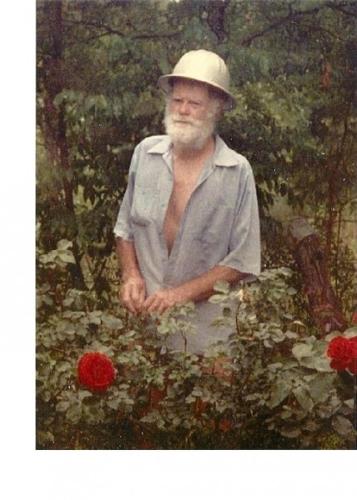
One woman, a neighbor of Nik and Eva's in Alabama, gave Musick a photograph of Nik he believes may have been taken by Eva in about 1990.
It shows a lanky older man with a curly beard wearing an old-style oil-rig worker's helmet, looking straight into the camera, enigma all over this face.


