
Like Sherman marching to the sea, settlers and miners flowing into Nebraska Territory angered the region's original inhabitants.
Add to that the removal of most federal troops in the territory to fight in the Civil War, and many living in Nebraska Territory found themselves at the forefront of a brewing war with tribes by the Civil War's start in April 1861.
"This was an outgrowth of building antagonism by gold rushes and people traveling on trails," said James Potter, senior research historian for the Nebraska State Historical Society, who recently completed a book on Nebraska's role in the Civil War.
When the war began, the government withdrew federal troops from Fort Kearny, Fort Laramie and Fort Randall, all of which were within Nebraska Territory at the time, and sent them to fight in the East and South. Those forts were key outposts placed along overland trails to protect pioneers from raiding Natives.
People are also reading…
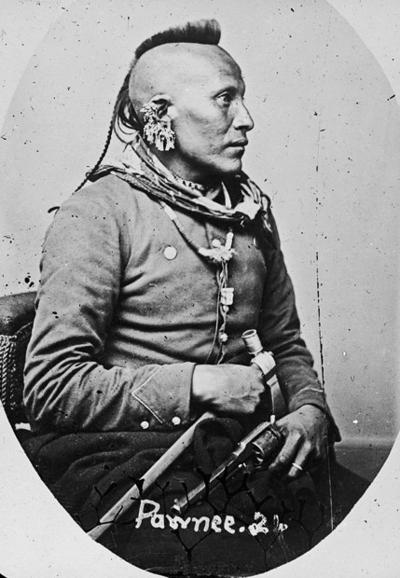
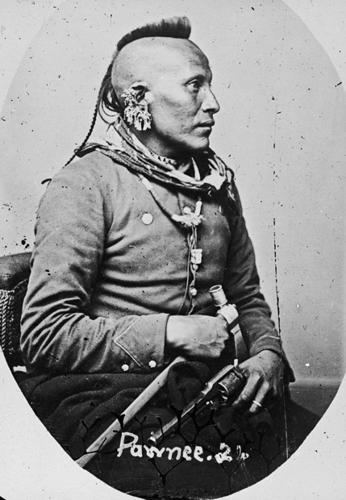
Over the course of the war, Nebraska provided nearly 3,300 volunteers to the war effort, including two companies of Pawnee and Omaha Natives.
Many Nebraska soldiers served in the 1st Nebraska Regiment and were sent to fight in Missouri, Tennessee and Arkansas. Nebraska Territory had some volunteer militia, but they were ill-prepared to fend off raiding tribes, Potter said.
The territory managed to raise a cavalry regiment that it hoped could be used to protect the frontier. However, that regiment was sent into Dakota Territory in 1863 after the Dakota Sioux uprising, Potter said.
The return home of the 1st Nebraska Regiment in 1864 proved timely as tribes began burning property and attacking ranchers, telegraph stations and farmers in the Platte Valley in August of that year.
Lacking the manpower to counter the attacks, the Army burned grass within the Platte Valley to stop raiding Natives from being able to feed their horses.
"They just didn't have enough soldiers to guard everything," Potter said.
The greatest conflicts between Plains tribes and the U.S. government didn't occur until after the Civil War, said John Carter, a researcher with the Nebraska State Historical Society.
Those conflicts included Red Cloud's War of 1866, in which the Lakota chief led a series of devastating attacks on forts along the Bozeman Trail, leading to the signing of the 1868 Fort Laramie Treaty and the abandonment of forts along the trail.
But the greatest strains on tribal life occurred largely as a result of buffalo herds being decimated by overhunting and split by railroads and overland trails, Carter said.
"The herd was split and overgrazed their territory," he said. "It was an ecological disaster."
By 1880, buffalo had been driven to near extinction and tribes were forced to move to reservations in order to receive government assistance, Carter said.
"The bison were simply gone, and without those the Native people on the northern Plains were reduced to a dependency," he said.