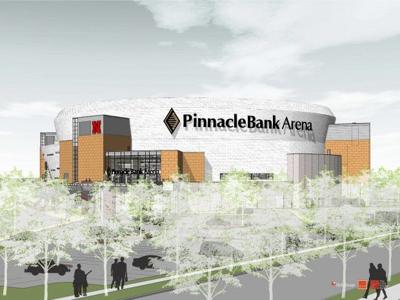

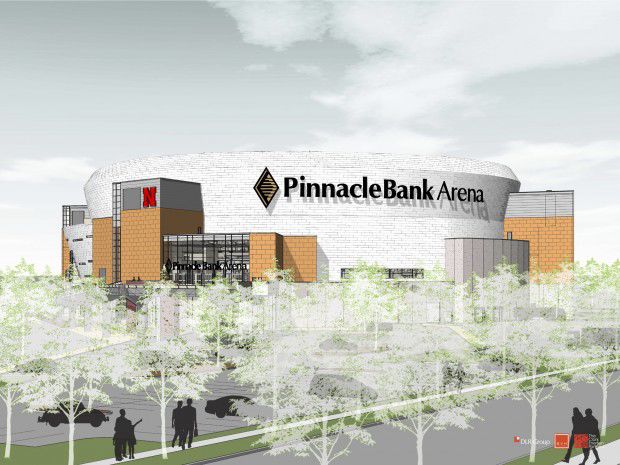
On its face, Pinnacle Bank's deal for naming rights to the city's arena -- $11.25 million over 25 years -- may look like a steal for the bank.
After all, Omaha got $14 million over 15 years for the CenturyLink Center, and that was eight years ago.
It also got $20 million over 20 years for TD Ameritrade Park, the new home of the College World Series.
Among arenas with major-college basketball tenants, Yum! Brands paid $13.5 million to put its name on the Louisville, Ky., arena which opened in 2010, and San Diego State University got nearly $1 million a year for 10 years from the Viejas Tribe of California.
But Ben Wrigley, a consultant working with the city to secure naming rights, said the Pinnacle Bank deal compares favorably to other naming rights deals for similar arenas in the region.
People are also reading…
Wrigley, vice president of project development for Legends Sales and Marketing, said the Pinnacle Bank deal, which is for $450,000 a year, not counting an additional $20,000 to be paid each year the arena hosts a high school state championship, compares favorably to deals on facilities of similar size in markets with less than 1 million population.
"We're right there with all the very recent deals that have been done," Wrigley said.
Among the deals Wrigley cited as comparable:
* Wells Fargo bank paid $11.5 million in 2005 for 20-year naming rights to the city arena in Des Moines;
* Intrust Bank paid $8.75 million in 2009 to put its name on Wichita's new arena for 25 years;
* Bank of Oklahoma paid $11 million to put its name on the arena in Tulsa in 2005.
None of those arenas has a major college basketball team as a tenant, although the Tulsa arena does have a WNBA team.
But Wrigley said having the Huskers as a tenant did not figure into the Pinnacle deal because the university has its own sponsorship deals.
The fact that Pinnacle does not have exclusive rights to things like court logos is unusual for a naming-rights deal, he said.
Atypical or not, it's still one of the most lucrative deals ever signed for what's considered a minor-league arena.
"The $450,000 annual value is in line with recent deals, and the total price of $11.25 million is one of the biggest ever in the non-major league arena category," said David Broughton, research director for SportsBusiness Daily.
Broughton said it's also unusual for an arena that's this early in the construction process to already have its main sponsor signed.
According to figures compiled by SportsBusiness Daily, Pinnacle Bank's naming-rights deal would be the fifth-most lucrative ever for a minor league arena in terms of total dollars and the sixth-most lucrative in terms of dollars per year.
Among all facilities with a college team as the main tenant, including both stadiums and arenas, the Lincoln deal would rank 13th for total dollars and 18th for annual dollars, according to the publication.
Dan Marvin, the city's arena coordinator, said officials feel pretty good about the naming-rights deal.
"In this category, we feel we've met a lot of our benchmarks," he said.
The city's original projections for naming rights revenue were in the $2-million-a-year range, but Marvin said that includes more than just the arena naming rights. It also includes rights to name concourses, premium seating levels and other areas.
"It's important to emphasize that this is the first one of several opportunities for naming rights," he said.
The city's agreement with Pinnacle allows for three exterior signs, the bank's logo on the center-hung scoreboard, public exterior doors and adjacent light pole banners, signs on the main and upper concourses and use of a suite. Pinnacle also can use the arena for company events two days each year.
Pinnacle Bank President Mark Hesser said there was "pretty good back and forth" between the bank and the city over the deal, but he feels both sides came out in good shape.
Hesser said the bank, which has never done more than sponsor a high school scoreboard, was first contacted in the summer about being a possible naming rights candidate by former NU Foundation president Terry Fairfield. Bank management then met with Wrigley a few months ago and got serious about making a deal after a couple of weeks of research and reflection.
He said the deal is a "two-fold accomplishment" in that it both gives Pinnacle marketing exposure and also allows the bank to contribute to the arena.
"We looked at it as an opportunity to give back to this project and to the city of Lincoln," Hesser said.