


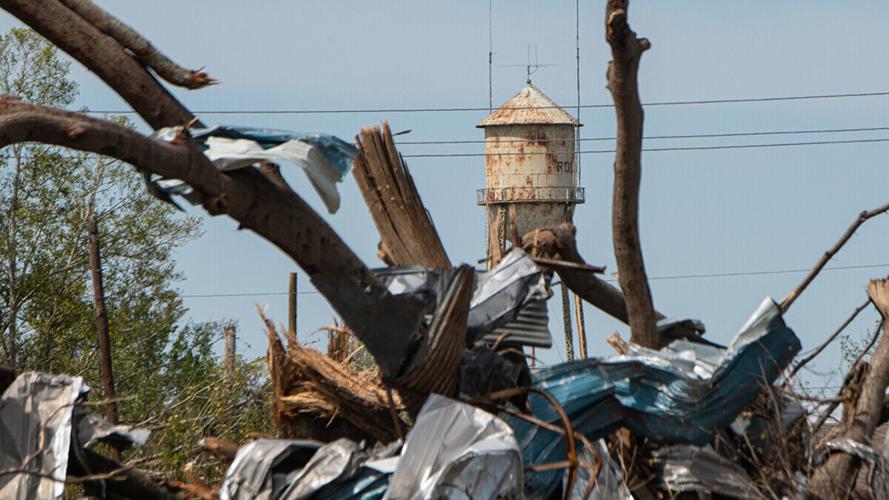
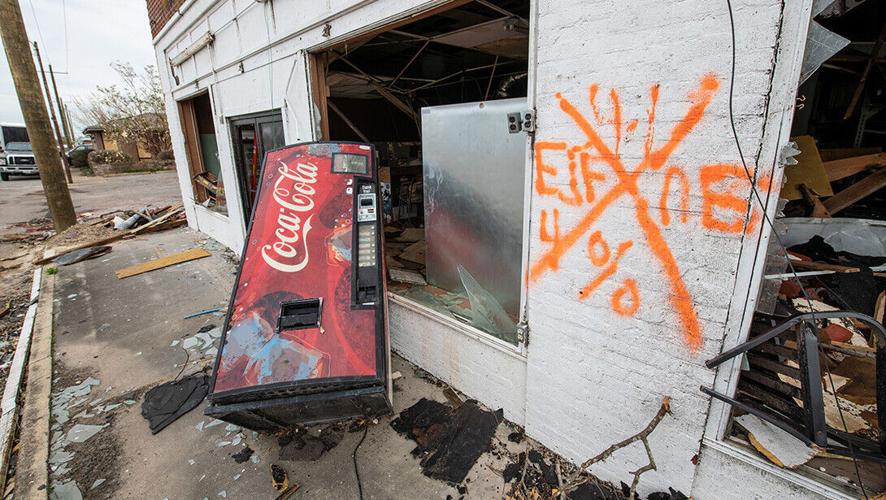

When a powerful EF-4 tornado tore through Rolling Fork, Mississippi, on March 24, 2023, social media became a critical tool for sharing weather warnings, damage reports and recovery information. But a new study from University of Nebraska–Lincoln media scholar Cory Armstrong found that the same disaster also exposed persistent communication gaps facing rural and underserved communities.
By analyzing social media activity before, during and after the tornado, which killed 17 people and injured dozens more, Armstrong and University of Alabama researcher Matthew Van Dyke found that digital platforms helped spread information throughout the disaster. At the same time, interviews with emergency managers and weather officials revealed ongoing challenges ranging from limited broadband access to fragmented media, raising questions about how best to reach vulnerable populations during life-threatening events.
People are also reading…
The case study can help inform emergency management entities everywhere and adds to Armstrong’s expertise in, and research on, severe weather messaging and how individuals use traditional and emerging media to make decisions during weather events.
“Every disaster is unique, but there are patterns,” said Armstrong, Pike Professor of Journalism. “The first thing that breaks down is communication — that's the first thing that happens when a disaster starts. We can learn something from each disaster and each event and figure out where we fell short. How can we do things better?”
The Rolling Fork tornado presented several challenges for sharing information. First, it was a nighttime tornado. Second, Rolling Fork is a small rural community, more than an hour’s drive from the nearest metro. About 30% of its population was living in rented mobile homes, and more than 20% was considered living in poverty.
Armstrong and Van Dyke tracked social media activity on X, formerly Twitter, over a 120-day period, from two weeks prior to the storm through July 8, 2023, separating the posts over three periods of time: preparedness, before and during the storm; response, the 48-hour period after the storm; and recovery, through the end of the 120-day period.
Among the social media posts cataloged by the researchers, posts regarding damage remained frequent through all three time periods studied. Weather information was shared the most over the preparedness and response phases. Posts regarding news about the tornado were highest in the recovery period, which Armstrong said likely reflects how far Rolling Fork is from Jackson, Mississippi, the closest city with an over-the-air news station, 85 miles away.
Armstrong was surprised at limited discussion surrounding blame, specifically focused on government, and that there was a lot of discussion about storm chasers in the recovery phase weeks after, garnering nearly 15% of mentions.
The researchers also interviewed local, state and federal disaster personnel, including weather forecasters and emergency management workers. Most shared concerns about various barriers to disseminating information to rural areas, including lack of broadband access, news coverage and a fractured media landscape where people get information from many media channels.
"It's not one message that fits everything,” Armstrong said. “A uniform message works for a percentage, and I'm going to say most of the population, but there is going to be a percentage of population that cannot get or hear that message. If we really want to make sure that we're doing a public safety catch-all, we need to be addressing all of our populations."
Armstrong also pointed out that transient communities, where renting is more common than home ownership, likely need more communication related to finding shelter and safety away from the hazard — before a disaster strikes.
"We have to be thinking about what are the messages that we give to people in underserved populations that are in communities that can't evacuate,” she said. “This one uniform message isn't enough. We have to kind of say, if that's not possible, then here is strategy B, here is strategy C."
Armstrong is expanding her research into communication in rural communities during disasters, especially in Nebraska.
“We’re looking at all disasters, including wildfires, and how rural areas can develop and deploy communication strategies,” she said. “We know that some counties or entities do things well, but a disaster doesn’t stop at a county line. How can we share those resources and plans across counties and states? We're still seeing a lot of silos.”


