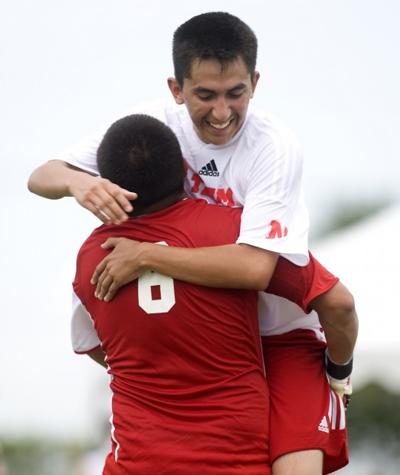

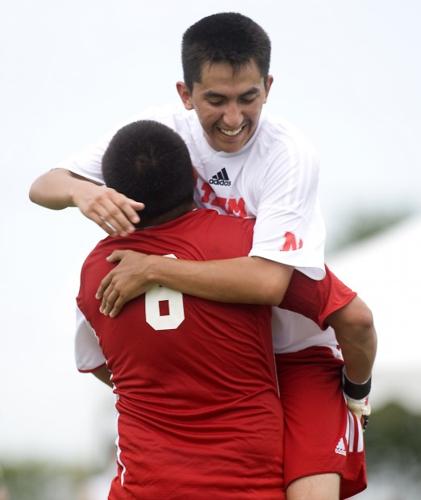
You did it, Lincoln.
You pulled off the biggest sports event in the history of the state -- the 2010 Special Olympics USA National Games -- this past week.
You volunteered. You cheered. You made people feel welcome here.
And you left thousands of athletes with thousands of memories to carry home with their medals.
"God bless you," Chuck Cooper, CEO of the 2010 games, said Saturday. "I'm so proud of Lincoln.
"Everybody was just so amazed."
It was a slam dunk, he and other exhausted organizers said Saturday, the day most athletes and families flew or drove away. There were no major mistakes, organizers say. Competitions ran efficiently, for the most part. Everyone was shuffled through the dining halls and dorms, shuttled to the sports venues.
People are also reading…
"You guys treated us like royalty," powerlifting coach Joe Patrick said by cell phone Saturday, after arriving home in Rhode Island on a Cessna airlift jet.
He and his team were on one of the first flights out of Lincoln, just before 6 a.m.
"The people were so nice," Patrick said with his East Coast accent. "We had people beeping at us as we were walking around. One of our athletes is on half-crutches, halfway up his arms. People were telling him, ‘Go get 'em!' and ‘Welcome to Nebraska!'"
Jeff Maul, executive director of the Lincoln Convention and Visitors Bureau, was at the airport Saturday, seeing athletes off in the Cessna airlift and giving final hugs and high-fives.
"Years of planning went into this event," he said. "But I never would have imagined we'd have done such a 100 percent perfect job. This is truly one of those events that you hate to see leave your community. This is one where you truly shed a tear and your heart drops because you've created such a social attachment to the athletes and families.
"It's going to be hard to replace this in the future with any other event."
Some successes of these games:
- The Cessna airlift, which transported about 800 athletes and their coaches in and out of town without a hitch (and with Harrison Ford).
- The opening ceremony, which set the tone of unity and fun.
- Flag football, an exhibition sport this year. It was such a hit that it looks like it will become an official Special Olympics sport.
- The level of competition. That Florida basketball team? That 71 in golf? That bowler from Michigan who rolled strike after strike?
- The athletes walking around downtown with medals clinking, faces smiling and the knowledge that they were the town's sports heroes.
- Special Olympics Town at Pershing Center and its Healthy Athletes program, which gave out 5,000 free health screenings to about 2,000 athletes.
- The closing ceremony/youth rally Friday night, which challenged athletes and fans to take the flame of hope back home with them and work to change attitudes about people with intellectual disabilities.
- The legacy it will leave behind for Special Olympics Nebraska -- in more athletes, more volunteers and more donations.
Dr. James Jenkins, a dentist with the University of Nebraska Medical Center's College of Dentistry in Lincoln, was one of the many Nebraska health workers who volunteered all week at Pershing.
He led a first-time Special Olympics dental program that will probably continue at other games -- 30 fully functional dental chairs set up on the stage of Pershing.
The experience, he said, opened his eyes to the health needs of intellectually disabled people.
Like many other health professionals, he said, he figured Medicaid took care of their needs, and their teeth. But that's not how it is in much of the country, he found out. He saw many athletes with "apple core" teeth -- like a brown apple core. He heard from many athletes that they couldn't afford dental care because adult Medicaid in their states didn't cover it.
He wants to continue to volunteer for Special Olympics and fight for dental health issues for intellectually disabled people.
A core group of a dozen people planned these games. One of them was Sarah Leeth, vice president of marketing and publication relations.
"I feel like we're going to get a big head over it, because we've had nothing but incredible compliments," she said. "But I don't think we can take credit. I think it's absolutely the city of Lincoln, the state of Nebraska, the countless volunteers -- everyone who did their part to make it such a success."
Steve Bennett was chief operations officer for the games. He's been with Special Olympics for 14 years, helping in the past with the World Winter Games in Alaska and in Boise, Idaho.
He oversaw the operations center in Lincoln. The center tracked emergencies and incidents. He said it was the quietest it's ever been for national or world games. Medical staff responded to many incidents, he said, but no athlete was admitted to the hospital and kept there.
Kudos to those workers, he said.
Kudos to Lincoln, he said, for embracing these athletes.
"The awareness and the legacy we're leaving with the community is what Special Olympics is and stands for," Bennett said. "Seeing their abilities, and not their disabilities."
Said Maul, of the convention and visitors bureau: "We've done a good job focusing on the economic impact this will have leading into the games (an estimated $40 million). It's an amazing impact for our community. But the impact it's left on people's lives, young and old, is something that's going to be a lasting memory."
Except for a few humid afternoons, even the Nebraska weather cooperated, leaving a gold-medal experience for athletes and families.
And probably for you, too, Lincoln. Right?
But Patrick, the Rhode Island powerlifting coach, did have a few complaints.
The weather, he said. Too humid.
The cicadas, he said. Too loud.
He laughed over the phone.
"And when we left this morning, they didn't have coffee for us at 5 a.m."
Reach Colleen Kenney at 402-473-2655 or ckenney@journalstar.com. Reach Jordan Pascale at 402-473-7120 or jpascale@journalstar.com.