


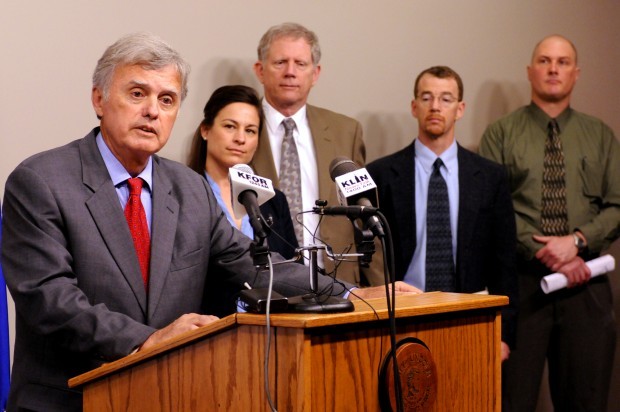
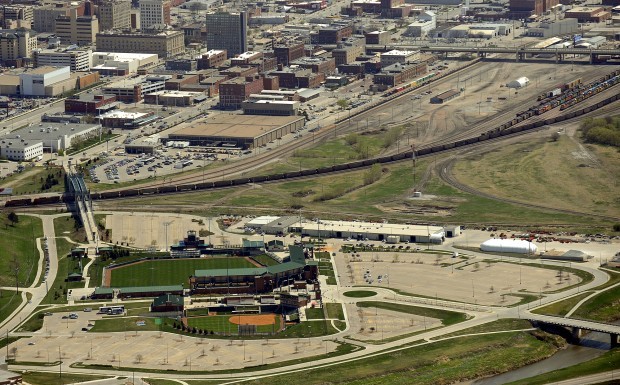
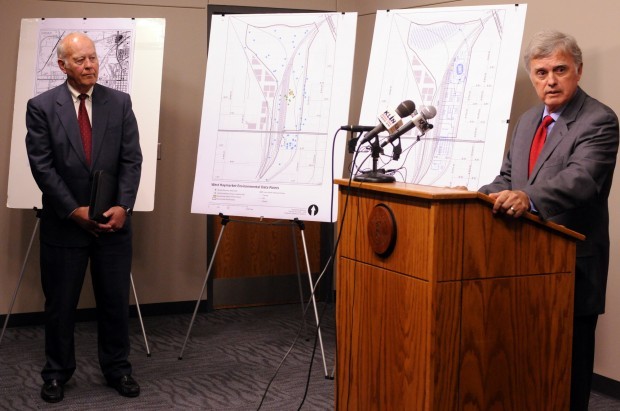
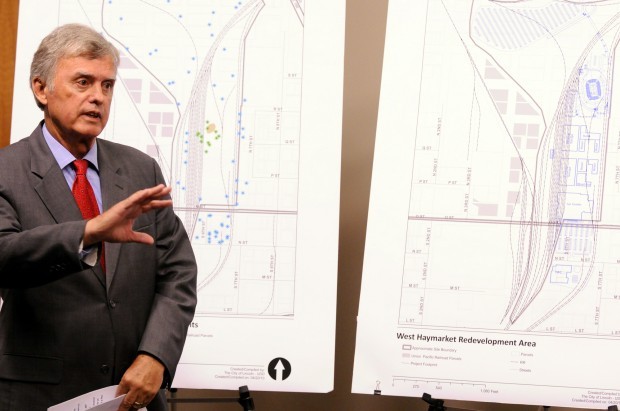
On the 40th anniversary of Earth Day, Lincoln Mayor Chris Beutler announced testing at a railyard west of the Haymarket shows the kind of contamination the city expected -- and can deal with -- to turn the area into an arena and private buildings.
Tests on Burlington Northern Santa Fe Railway property turned up nothing unexpected, the mayor said at a news conference Thursday.
"There were no surprises," he said.
The city received soil and groundwater sample results for the 100-acre BNSF parcel -- one of seven parcels the city would buy if voters approve the project May 11.
The Environmental Protection Agency released sample results only; a final report is expected by April 30.
Region 7 EPA spokeswoman Belinda Young said the EPA would have no comment on the "raw data" that were released by Beutler until a final report explaining the data is released next week.
People are also reading…
A contractor for the EPA conducted what's known as "Phase 2" testing on BNSF property, and the results indicate:
- High levels of arsenic and lead in the soil. But the city's consultant said the arsenic is naturally occurring and less than the average amount in Lancaster County.
- High levels of metals such as arsenic, lead, barium, cadmium, chromium and selenium in the groundwater.
- Diesel and motor oil in some of the soil; diesel in some groundwater.
- High levels of PCBs (polychlorinated biphenyls) in some of the soil.
But city officials said that's not unusual for a 100-year-old railyard -- and no new major contamination sources were found.
High levels of lead near a former railroad roundhouse can be capped and covered with a parking lot, for example.
The city also has long been aware of a diesel plume the size of a city block northwest of Lincoln station.
BNSF has been slowly removing the diesel since it was discovered in the late 1980s. The city expects it would excavate the soil and have the diesel spill cleaned up by November.

The EPA contractor also took samples on property owned by three other entities, but those results are not done yet. The owners of another two properties -- Union Pacific and Alter Scrap -- have not granted the city access for EPA tests; in fact, U.P. has refused access unless the city buys the land.
But city officials are pleased with the BNSF results, saying the contaminants detected are similar to what was found in previous testing by HWS Consulting Group Inc.
HWS has estimated the cost to clean up the 400-acre development area at $7.5 million at the most.
HWS -- which donated $15,000 to the pro-arena campaign -- analyzed the EPA results for the city on its own time.
Jim Linderholm, chairman of HWS, said he sees no conflict with his company conducting environmental testing for the city and analyzing EPA results while donating to the pro-arena campaign.
"It's part of being a good citizen in Lincoln," he said.
But some opponents are skeptical of HWS's estimate, saying it's impossible to know true cleanup costs until the city owns the land and can do a more thorough Phase 3 analysis.
The city recently began soliciting proposals for environmental consultants to do that kind of assessment of the site -- contingent on a "yes" vote.
This "full site characterization" would be done this year and next and would "pin down really hard numbers," said mayoral aide Miki Esposito.
The city has to own the land before that type of analysis can begin.
Representatives of the No2Arena group, which opposes the arena project -- in part because of a concern about how much the city will have to pay for cleanup -- declined to comment on the EPA results until they had a chance to review them.
A representative of the pro-arena campaign, Steve Mossman -- an attorney whose practice includes environmental law -- said the results help rebuff opponents' claims the cleanup will be more costly than projected, at least for the BNSF land.
Beutler said he spent much of his career in the Legislature fighting for environmental protection, and "I cannot and would not ... endanger people to enhance Lincoln's economic interests."
If voters approve the project, the city would participate in a state voluntary cleanup program officials say would protect the city from future federal or state environmental enforcement.
City officials say they could get up to $1.6 million in state and federal grants to help pay for the cleanup.
Reach Deena Winter at 473-2642 or dwinter@journalstar.com..


