


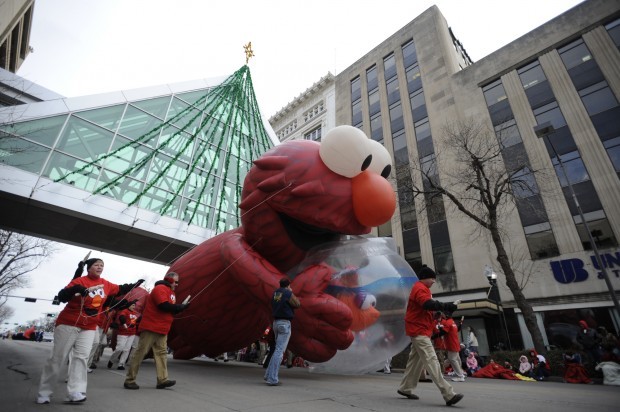
Maybe it fits on the same list as flying cars, hoverboards and personal jetpacks, but back in the mid-1960s, someone dreamed up a downtown Lincoln of the future.
It was a downtown where shoppers would never need to reach the ground floor, a massive shopping mall that would owe its existence to "overhead pedestrian walkways."
We call them skywalks now.
In the mid-1980s, the romantics of urban development hoped for 14 of them, stretching uninterrupted from the planned Lied Center for Performing Arts to Cornhusker Square and crossing P and O streets three times each. The city got about halfway there.
The most recent pair of skywalks was built at the turn of the millennium, both extending from the Embassy Suites at 10th and P streets to parking garages to the east and west.
People are also reading…
By that point, six interconnected walkways already crossed roadways south of P Street. Those included the O Street skywalk, which created a squeeze for balloons in the Star City Holiday Parade after it was built in the mid-1990s.
Another skywalk, which crosses 12th Street just south of O, is adorned with a mural that was completed in 2007, designed by Lincoln artist Larry Roots.
Two more skywalks would be needed to bridge P Street and link the Embassy Suites skywalks with the rest of the walkways. That's not likely to happen any time soon, officials say.
The skywalk plan -- centered on the connections between the Centrum Plaza and the Gold's and Miller & Paine buildings -- faltered as major department stores started abandoning the downtown area.
But the skywalks remain.
They're used mostly by office workers and walkers hoping to escape the cold or heat, not shoppers hopping from store to store. Although some restaurants remain, most food and retail outlets are at ground level these days.
Instead of traveling from the borders of the University of Nebraska-Lincoln campus to near the State Office Building, the furthest one can travel via skywalk is from the Rampark Garage at 12th and P streets to the Carriage Park Garage three skywalks south and one skywalk west.
"Skywalks fit in the plan," said Hallie Salem of the city's Urban Development Department. "However, we're seeing them more as shorter connections for parking garages or things like that, rather than as a system of sidewalks in the air.
"It's less about connecting retail and more about connecting people to their parking."
Dallas McGhee, also of Urban Development, said the city's future plans don't include any specifics for additional skywalks. If more are built, it likelywill be on a project-by-project basis.
"There isn't a grand plan," McGhee said.


