


Toxic cyanobacterial blooms can close lakes, contaminate drinking water and pose risks to human health. A new project at the University of Nebraska–Lincoln is exploring an unlikely tool for mitigating these blooms: virovory, the phenomenon of organisms eating viruses as a food source.
Aquatic ecologist Jessica Corman is leading an interdisciplinary Husker research team in exploring virovory’s potential to combat eutrophication — a surplus of nutrients and minerals in the water — which is a major driver of toxic blooms. With a three-year, nearly $1.1 million grant from the National Science Foundation, Corman’s team will investigate what happens when a nitrogen- and phosphorus-rich virus is eaten and shifts energy upward through the food chain — and how this process impacts nutrient fluxes in inland aquatic ecosystems.
The work opens the door to harnessing virovory to remove excess nutrients from water.
People are also reading…
“This is a way to think about using food web manipulations to potentially improve water quality,” said Corman, associate professor in the School of Natural Resources. “This is something that’s been done with fish before, but no one has ever thought about it in terms of viruses.”
The work builds on Husker biologist John DeLong’s groundbreaking discovery in 2023 that Halteria, single-celled ciliates found in lakes, can survive and reproduce solely on a diet of viruses. Now, the researchers are taking a closer look at the broader implications of this phenomenon. The Nebraska team is the first in the nation to investigate how virovory influences freshwater ecosystems.
“The underlying idea is that if viruses are a food source, you can imagine a scenario where you could inoculate a lake with benign viruses or ciliates to induce a cascade in the food web to reroute phosphorus,” Corman said.
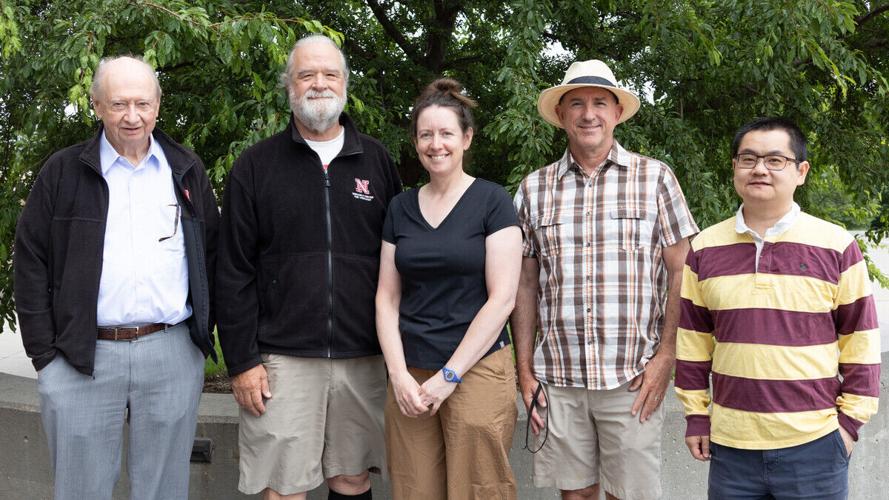
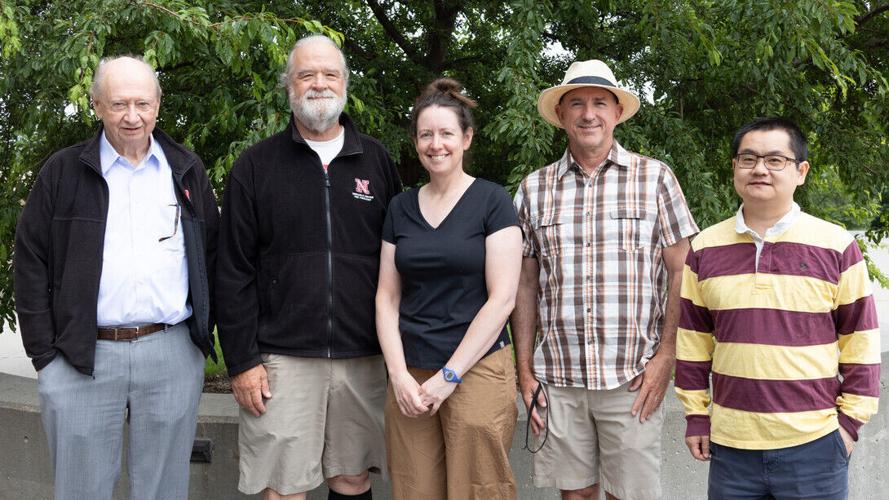
DeLong, professor of biological sciences, is on the team, along with David Dunigan, research professor of plant pathology; James Van Etten, William Allington Distinguished Professor of plant pathology; and Qiuming Yao, assistant professor of computing. Dunigan, Van Etten and Yao are members of the Nebraska Center for Virology.
A new pathway for freshwater viruses
Traditionally, viruses in freshwater systems were believed to only infect bacteria, causing those cells to burst and release organic matter and nutrients — including phosphorus and nitrogen — into the water. The nutrients fuel microbial growth, including the cyanobacteria that form algal blooms. In this “viral shunt” model, nutrients are quickly cycled through a microbial loop, never reaching higher levels of the aquatic food chain.
Corman’s team is exploring a virovory-based route. In this pathway, when a bacterial cell ruptures and ejects viral matter, protists — the microscopic organisms bridging the microbial world to the larger food web — eat it. When the protists are then consumed by larger organisms, the viral-bound phosphorus and other nutrients shift upward.
“Suddenly, instead of those nutrients being available for more bacterial production or algal production, they’re going up into animals that will then feed higher trophic levels,” Corman said. “It’s diverting nutrients in the base of the food web up to higher portions of the food web.”
If present, this route could open the door for mitigating eutrophication. Phosphorus is of particular interest because the element does not have a gas phase, leading to accumulation in lake ecosystems that takes decades to remedy.
Tracking nutrients through the food web
The work marks the first effort to map the movement of viral-bound phosphorus and nitrogen after a virus is consumed. Corman’s team will grow a virus with the radioactive isotope P32 and the stable isotope N15, which will allow the researchers to track the nutrients through the food chain.
They will feed the virus to the ciliates that DeLong showed to be virovores, then feed the ciliates to copepods, which are multicellular crustaceans higher in the chain. It is akin to chickens eating an insect, Corman said.
“We’re going to analyze whether that P32 and N15 actually went up the trophic level and are incorporated in their bodies,” she said. “This is a test to establish whether they’re assimilating these nutrients — both the primary consumer and the secondary consumer.”
The team will also conduct food web manipulation experiments using water collected from lakes around Lincoln, with the goal of determining how virovory occurs in natural ecosystems. The researchers will remove different components from the food web and measure the system’s response. They also will build mathematical models that predict how virovory influences nutrient fluxes in a given ecosystem.
Additionally, the team is developing an innovative tool for counting the number of viruses, and how many particles of each, are in a water sample. Today, a major challenge in the field is quantifying viruses: It is possible to count the number of viral particles in a sample, but it is extremely tedious and does not reveal viral diversity. The Husker team is at the forefront of developing a genomics-based tool that provides the number and type of viruses in a sample.
Opening doors for students
The project helps fill a national gap in undergraduate education: Few institutions offer standalone undergraduate courses in virology. The grant will enable three to four students each summer to gain research experience in viral ecology. The team will also design an undergraduate curriculum module focused on “virovore hunting” that other instructors can use.
“This is a really unique opportunity to expose students to the idea that viruses are not just infecting humans — they’re also interacting with the environment,” Corman said. “We’re studying virovory in lakes, but it’s probably happening in soils and in other ecosystems, as well.”
The team is also reaching the greater public through a partnership with Nebraska Extension. Together, they will disseminate materials on water quality and eutrophication.


